Mistakes in Accessible Design
Common Mistakes in Accessible Playground Design
Many playgrounds are built with good intentions, yet small design decisions can unintentionally create barriers for people with disabilities.
Understanding common mistakes helps ensure that inclusive playgrounds truly work for the people they are intended to support.
1. Accessible Equipment on Inaccessible Surfaces
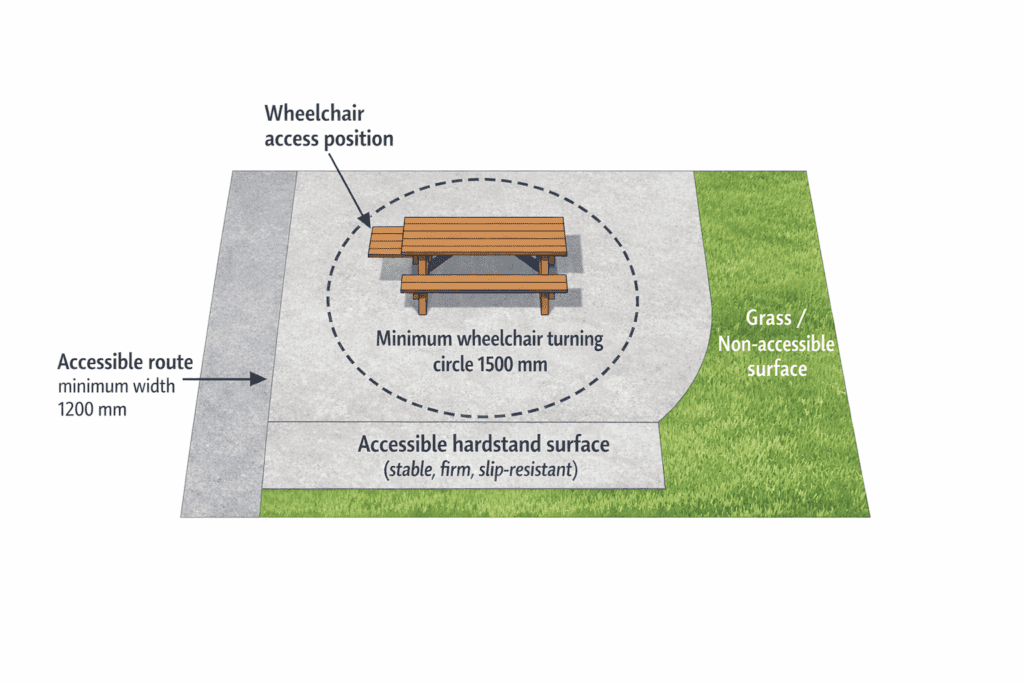
One of the most common problems is installing accessible play equipment on loose surfaces such as bark, sand, or wood chips.
While these surfaces can be cost-effective, they often prevent people using wheelchairs, walking frames, or pushchairs from reaching the equipment independently.
Accessible equipment must be paired with firm, stable surfacing so users can approach and move around safely.
2. Accessibility That Stops at the Entrance
Some playgrounds include accessible paths to the edge of the play area but not through it.
This creates a situation where users can reach the playground but cannot access the equipment inside it.
True accessibility requires continuous routes that allow people to move through the entire play space.
3. Equipment That Requires Lifting
Some equipment is described as “accessible” but requires a carer to lift the user into the seat.
Examples include certain basket swings or high platforms without transfer support.
Equipment that relies on manual lifting:
limits independence
increases injury risk for carers
becomes unusable as children grow older and heavier
Accessible design should minimise or eliminate the need for manual transfers wherever possible.
4. Designs Based Only on Children
Playgrounds are often designed with only small children in mind. However, disability affects people of all ages.
Accessible playgrounds should consider:
teenagers with disabilities
adults with mobility impairments
stroke survivors
grandparents with reduced mobility
Inclusive play spaces should support intergenerational use, not just childhood play.
5. Insufficient Space for Mobility Devices
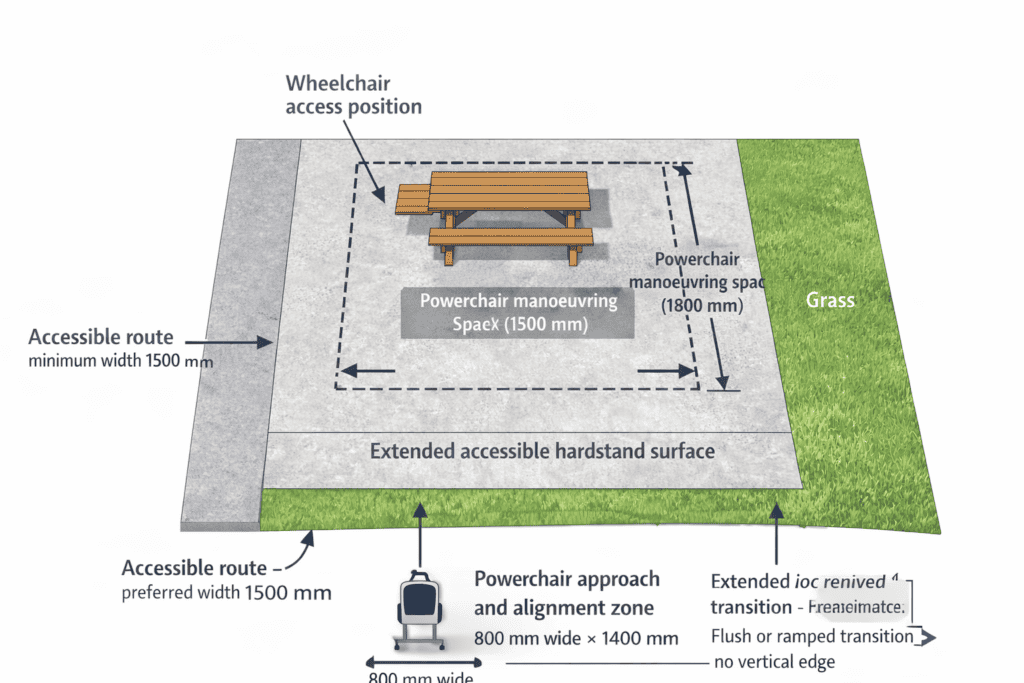
Modern powered wheelchairs and mobility scooters require more space than many playground layouts allow.
Tight paths, narrow entrances, or closely spaced equipment can make it difficult or impossible for mobility devices to manoeuvre.
Designs should provide:
adequate turning space
clear routes around equipment
room for carers and family members
6. Over-Reliance on a Single “Accessible” Feature
Some playgrounds include one accessible element—such as a basket swing—and then describe the entire playground as inclusive.
True inclusive play requires a variety of equipment and experiences that allow people with different abilities to participate.
Accessible design should offer multiple ways to engage in play, including:
movement
sensory experiences
social interaction
ground-level play
Designing Playgrounds That Work
Accessible playgrounds succeed when planners consider the entire environment, not just individual pieces of equipment.
When surfaces, paths, equipment, and space are designed together, playgrounds become places where everyone can participate, explore, and play.
Inclusive design is not about adding special features—it is about removing barriers so more people can take part.