Research and Evidence
Research and Evidence
Why Research Matters in Inclusive Playground Design
Inclusive playgrounds are not just a design trend — they are supported by a growing body of research and real-world evidence.
This research consistently shows that play is essential for children’s physical, social, emotional, and cognitive development. It also shows that without intentional design, many children — especially disabled children — are excluded from these benefits.
Evidence-based design ensures that playgrounds are not just accessible in theory, but effective in real life.
Play Is Essential for Child Development
Research clearly shows that play is a critical part of childhood.
Outdoor, unstructured play has been linked to:
Improved social skills
Reduced stress and anxiety
Increased physical activity
Enhanced learning and development
Playgrounds are not just recreational spaces — they are environments where children develop the skills they need for life.
Inclusive playgrounds ensure these benefits are available to all children, not just some.
Inclusive Play Improves Social Outcomes
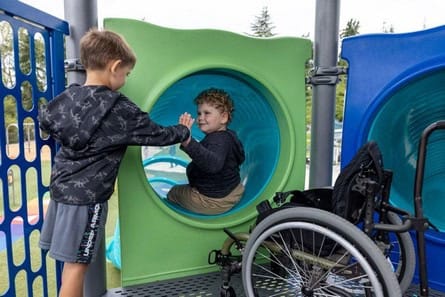
One of the strongest findings across research is the social impact of inclusive play.
Studies show that inclusive playgrounds:
Encourage interaction between children of different abilities
Support the development of friendships
Build communication and cooperation skills
Children who play together learn together.
Inclusive environments also help reduce stigma and promote understanding, empathy, and acceptance from an early age
This is not just about play — it is about shaping future communities.
Physical and Health Benefits
Playgrounds provide important opportunities for physical development.
Research shows that access to playgrounds increases:
Physical activity levels
Gross motor skill development
Overall fitness and health outcomes
Inclusive playgrounds allow children with disabilities to participate in these benefits, rather than being excluded.
This supports healthier lifestyles and improved long-term wellbeing.
Emotional Wellbeing and Confidence
Inclusive play environments also support emotional development.
Children who can participate in play:
Develop confidence
Build independence
Improve self-esteem
Research highlights that inclusive play helps children feel valued and included, which is critical for emotional wellbeing
When children feel included, they are more likely to engage, explore, and grow.
Cognitive and Learning Benefits
Play is also a learning process.
Inclusive playgrounds support:
Problem-solving skills
Creativity and imagination
Decision-making and exploration
Research shows that playground environments contribute to cognitive development by encouraging children to explore, experiment, and interact with others
Inclusive design ensures these opportunities are available to children with a wide range of abilities.
Inclusive Play Benefits Everyone
Research consistently shows that inclusive playgrounds benefit all children — not just those with disabilities.
Children without disabilities:
Develop empathy and understanding
Learn to interact with diverse peers
Build stronger social awareness
Inclusive play reflects the real world.
It prepares children to live, work, and connect in diverse communities.
Families Benefit Too
Research also highlights the importance of the family experience.
Inclusive playgrounds:
Support family participation
Reduce barriers and stress
Create shared experiences
Studies exploring family experiences show that inclusive playgrounds strengthen family connections and allow all members to participate together
Play is not just for the child — it is a shared experience.
Barriers Still Exist
Despite growing awareness, research shows that many playgrounds remain inaccessible.
Studies have found that playgrounds can be significantly less accessible for children with disabilities compared to others
Barriers include:
Inaccessible surfaces
Poor layout
Lack of inclusive equipment
Limited supporting infrastructure
This highlights the need for continued improvement and evidence-based design.
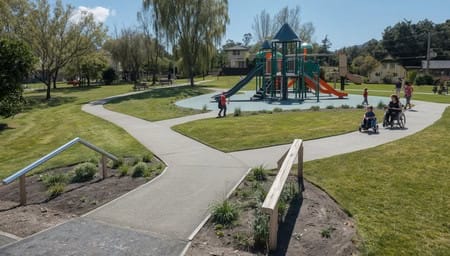
Design Must Go Beyond Equipment
Research shows that inclusion is not just about adding accessible equipment.
The entire environment matters.
This includes:
Pathways
Toilets
Seating
Wayfinding
Surrounding infrastructure
Studies show that families often experience barriers in the journey to and within the playground — not just at the equipment itself
Inclusive design must consider the full experience.
Universal Design Principles
Research into universal design reinforces the importance of designing for everyone from the beginning.
This approach focuses on:
Adapting environments to diverse needs
Creating flexible, usable spaces
Supporting social interaction and participation
Universal design is not about special features — it is about designing better spaces for everyone.
Community and Social Impact
Inclusive playgrounds have broader social benefits.
Research shows they:
Strengthen communities
Promote inclusion and belonging
Encourage positive social behaviour
Inclusive spaces model values such as respect, kindness, and equality
They help build communities that are more connected and inclusive.
A Lived Experience View
Research supports what lived experience has always shown.
When a playground is inclusive:
Children play together
Families stay longer
Communities connect
When it is not:
Children are excluded
Families leave early
Opportunities are lost
Evidence and lived experience point in the same direction.
Inclusive design works.
Final Thought
The research is clear.
Play is essential. Inclusion matters. Design makes the difference.
Inclusive playgrounds are not just a “nice to have” — they are a necessary part of healthy, connected communities.
Designing with evidence ensures that playgrounds deliver real outcomes, not just good intentions.
Because every child deserves the opportunity to play, learn, and belong.
From Inclusive Play to Inclusive Learning
Research shows that inclusive play supports confidence, communication, emotional wellbeing, empathy and social understanding. These same ideas also matter in classrooms, homes and everyday learning.
Inclusive Education NZ provides child-friendly resources that help children, families and educators explore disability, inclusion, emotions, participation and belonging beyond the playground.
Everyone Can Play
Resources that reinforce the idea that disabled and non-disabled children should have opportunities to participate, learn and play together.
Explore Everyone Can Play ↗Emotions and Wellbeing
Child-friendly activities and resources that support confidence, emotional understanding, self-expression and positive wellbeing.
Explore Emotions and Wellbeing ↗Disability Awareness
Resources designed to encourage understanding, empathy and positive conversations about disability, inclusion and belonging.
Explore Disability Awareness ↗