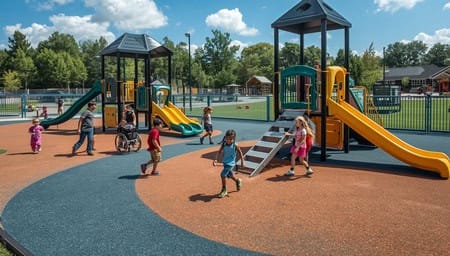
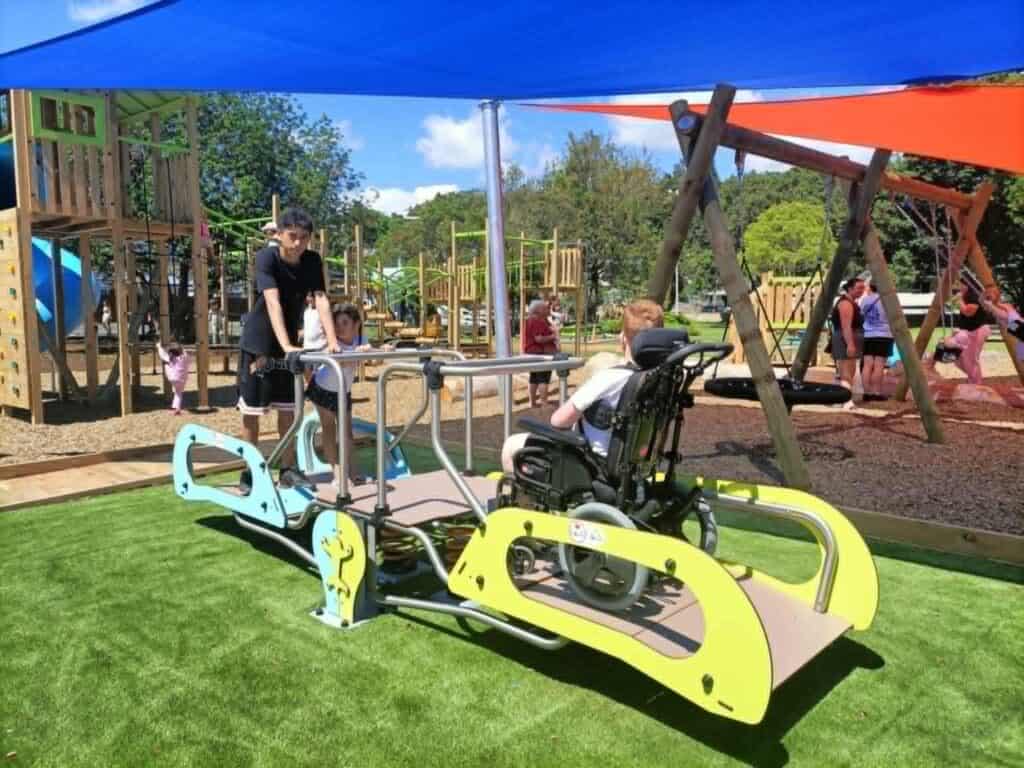
Shade, Shelter & Weather Protection
Shade, Shelter & Weather Protection
Why Shade and Shelter Matter in Inclusive Playgrounds
Shade and shelter are not just comfort features; they are essential for inclusion.
In New Zealand, sun exposure is a serious health risk, especially for children. Well-designed shade reduces UV exposure, lowers the risk of sunburn, and creates cooler, safer play environments.
But shade is not only about the sun.
Inclusive playgrounds must also consider rain, wind, glare, and changing weather conditions. If people cannot stay comfortable, they cannot stay at all.
Shade and shelter allow families to stay longer, support people with different needs, and make playgrounds usable in all conditions.
Protection from the Sun Is Critical
Children often remain in one place for extended periods. At swings, in sand play, in sensory areas, or in social spaces.
These areas must be protected.
Design guidance highlights that shade should be prioritised where children are stationary for longer periods.
Without shade:
Play surfaces become too hot
The equipment becomes unsafe to touch
UV exposure increases quickly
A well-designed shaded area supports safe, comfortable play throughout the day.
Shade Must Work Throughout the Day
Shade is not static.
The sun moves, and poorly placed shade structures can leave key areas exposed at peak times.
Effective design considers:
Sun direction and seasonal changes
Time of day when the playground is busiest
Movement of shadows across the site
Planning tools such as shade mapping or modelling can be used to ensure the right areas are protected at the right times.
A shade structure that only works part of the day is not enough.
Natural and Built Shade Should Work Together
The best playgrounds use a combination of natural and built shade.
Natural shade includes:
Trees
Planting
Green structures
Built shade includes:
Shade sails
Pergolas
Roofed shelters
Verandas
Guidance shows that combining natural and built shade provides better overall coverage and flexibility.
Trees provide long-term shade and environmental benefits, while structures provide immediate and predictable protection.
One without the other is rarely enough.
Shade Should Be Where People Gather
Shade must be placed where it is actually needed.
This includes:
Play equipment zones
Seating and rest areas
Picnic spaces
Accessible pathways
Waiting and social areas
Shade placed away from activity areas is often unused.
Inclusive design places protection directly over the spaces people use.
Shelter From Rain and Wind
Shade alone is not enough.
Playgrounds must also consider:
Rain protection
Wind exposure
Seasonal weather
Covered structures, such as roofed shelters or verandas, allow playgrounds to be used in light rain and provide protection from wind.
In New Zealand, guidance for schools notes that shelter should balance protection with the need to allow warmth and light into the space.
A playground that only works in perfect weather is not inclusive.
Temperature and Comfort Matter
Shade plays a major role in temperature control.
It helps:
Keep surfaces cooler
Reduce heat build-up on equipment
Create comfortable resting areas
This is especially important for:
Young children
Older adults
People with medical conditions
People sensitive to heat
Comfort directly affects how long people can stay and participate.
Design for Visibility and Safety
Shade structures must not create hidden or unsafe spaces.
Design should ensure:
Clear sightlines for supervision
Good lighting under structures
No hidden corners or blind spots
Parents and caregivers must be able to see children at all times.
Safety must remain a priority.
Accessibility Under Shade
Shade structures must not reduce accessibility.
This means:
Maintaining clear, wide pathways
Avoiding posts or supports that create obstacles
Ensuring surfaces remain firm and level
A shaded area that cannot be reached or used by a wheelchair user is not inclusive.
Shade must work with access, not against it.
Durability and Maintenance
Shade structures must be designed for long-term use.
They need to:
Withstand wind and weather conditions
Be resistant to vandalism
Be easy to maintain
Some lightweight structures, such as shade sails, may not require building consent under certain conditions, but still need careful design for wind loading and durability.
A damaged or removed shade structure provides no protection.
Flexible and Multi-Use Spaces
Good shelter design creates spaces that can be used for multiple purposes.
These may include:
Outdoor learning areas
Quiet spaces
Social gathering areas
Weather-protected play zones
Structures such as verandas and covered areas can extend the usability of a playground beyond play alone.
Inclusive design supports a wide range of activities.
Common Mistakes
Shade and shelter often fail due to poor planning.
Shade was placed in the wrong location
No protection during peak sun times
Structures that block access
Insufficient coverage
No consideration of wind or rain
Lack of maintenance
These mistakes reduce usability and limit inclusion.
A Lived Experience View
From lived experience, shade and shelter directly affect whether a space feels usable.
Without shade, surfaces become too hot. Without shelter, rain ends the visit. Without comfort, people leave early.
For many families, especially those supporting disabled children, comfort is not optional.
Shade and shelter allow people to stay, regulate, and enjoy the space without stress.
Final Thought
Shade and shelter are not secondary features.
They are essential infrastructure that supports health, comfort, and inclusion.
A well-designed playground works in the sun, wind, and light rain.
It provides protection where people need it most.
Because inclusion means designing for real conditions, not perfect ones.