Autism-Friendly Playground Design
Autism-Friendly Playground Design
Inclusion Benefits Everyone
Playgrounds should be places where all children feel welcome, safe, included, and able to participate in ways that work for them.
For many autistic children, however, traditional playgrounds can sometimes feel overwhelming, confusing, unpredictable, or difficult to navigate.
An autism-friendly playground is not about removing fun, challenge, or excitement.
It is about designing environments that recognise different sensory, communication, movement, and social needs so more children can successfully participate.
Good inclusive design benefits everybody.
Autism and Sensory Processing
Many autistic children experience the world differently due to sensory processing differences.
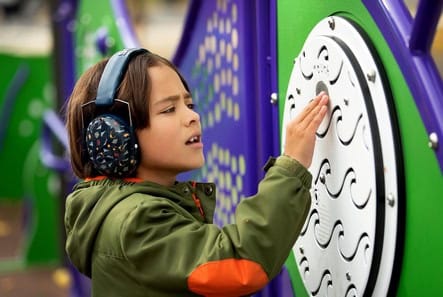
Some children may actively seek sensory input through movement, spinning, pressure, climbing, swinging, sound, or touch.
Others may become overwhelmed by:
Loud environments
Crowded spaces
Unpredictable movement
Bright colours
Visual clutter
Sudden noise
Lack of retreat spaces
Confusing layouts
Every autistic child is different.
That is why autism-friendly playground design should focus on flexibility, choice, regulation, and inclusion rather than one “perfect” design solution.
Predictability Helps Reduce Anxiety
One of the most important aspects of autism-friendly design is creating environments that feel understandable and predictable.
Large chaotic playgrounds with poor visibility, unclear pathways, and too many competing sensory elements can create stress and anxiety for some children.
Simple design features can make a huge difference:
Clear circulation pathways
Visible entrances and exits
Gradual transitions between spaces
Good sightlines for supervision
Defined activity zones
Quieter retreat areas
Consistent surfacing
Shaded calming spaces
Children should feel able to explore without becoming overwhelmed.
Movement is often regulated
Movement-based play can be extremely important for autistic children.
Swings, rocking equipment, climbing, spinning, balancing, bouncing, and sensory movement activities may help regulate the nervous system and reduce stress.
This is one reason inclusive movement equipment is so valuable.
Play should not only focus on physical challenge.
It should also support emotional regulation, sensory processing, and comfort.
Quiet Spaces Matter Too
Not every child wants constant stimulation.
Autism-friendly playgrounds should include spaces where children can pause, regulate, and retreat when needed.
This does not mean isolating children from play.
It means recognising that some children occasionally need:
Lower sensory environments
Shade and shelter
Reduced noise
Seating spaces
Sensory calm zones
Visual breaks from busy activity areas
Sometimes a child simply needs a moment to reset before rejoining play.
Inclusive Play Should Be Shared
One of the biggest mistakes in playground design is separating disabled or neurodiverse children from everybody else.
We strongly support inclusive equipment and environments that encourage shared participation.
Children should be able to play together naturally.
Not watch from the sidelines.
Inclusive play environments create opportunities for:
Social interaction
Shared experiences
Confidence building
Communication development
Understanding between children
Reduced stigma around disability and neurodiversity
Real inclusion happens when children participate together.
Safety and Elopement Considerations
Some autistic children may experience impulsive running or difficulty recognising danger, particularly near roads, waterways, parking areas, or large open spaces.
Thoughtful safety design can help reduce risk without creating environments that feel restrictive or institutional.
Depending on location, autism-friendly playgrounds may benefit from:
Fencing in high-risk areas
Controlled access points
Natural barriers and planting
Clear boundaries
Predictable circulation pathways
Quiet retreat areas near caregivers
Visible supervision zones
Safety and inclusion should work together.
Accessible Surfacing Is Essential
Surfacing plays a major role in autism-friendly and inclusive playground design.
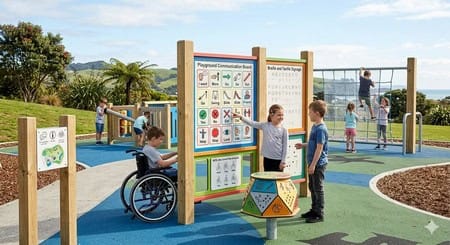
Loose-fill bark surfaces can create difficulties for many children and families, particularly when mobility aids, wheelchairs, walkers, or sensory regulation needs are involved.
Bark shifts, moves, and creates uneven surfaces, making it difficult to navigate safely.
Accessible surfacing systems provide:
Smoother movement
Better predictability underfoot
Improved wheelchair access
Safer transitions
More consistent sensory experiences
Better usability for families and carers
Inclusion is not just about the equipment.
It is about the entire environment.
Communication and Social Inclusion
Some autistic children may communicate differently or use alternative communication methods.
Playgrounds should support inclusion without requiring children to “fit in” socially before they are accepted.
Features that may support communication and interaction include:
Core boards
Visual communication systems
Interactive sensory panels
Cooperative play equipment
Side-by-side play opportunities
Quiet social spaces
Children communicate in many different ways.
Inclusive spaces should recognise and support that diversity.
Lived Experience Matters
Many autism-friendly playgrounds are still designed primarily around professional assumptions rather than lived experience.
Parents, autistic individuals, carers, therapists, and disabled families often identify practical barriers and design issues that are missed during traditional planning processes.
Something may appear inclusive on paper while functioning very differently in real life.
That is why lived experience should always be part of inclusive playground planning and design.
Inclusion Benefits Entire Communities
Autism-friendly playground design not only benefits autistic children.
The same design principles often create better spaces for:
Disabled children
ADHD children
Younger children
Elderly carers
Parents with strollers
Children experiencing anxiety
Families needing calmer environments
Mobility aid users
Inclusive design creates more welcoming communities for everybody.
Because every child deserves spaces where they feel safe, accepted, and able to participate fully in community life.