Accessible Playgrounds in Practice
What Accessible Playgrounds Look Like in Practice
Accessible playgrounds are not defined by a single piece of equipment. True accessibility is achieved when the entire play environment is designed so people can move through and participate independently.
The following principles are widely recognised in accessible design guidance and provide a practical framework for inclusive playground planning.
1. Accessible Surfaces
Surfaces must be firm, stable, and slip-resistant so that people using wheelchairs, walking frames, or pushchairs can move safely and independently.
Loose materials such as bark, sand, or woodchips can make movement difficult or impossible for many users. Accessible playgrounds typically include:
poured rubber safety surfacing
bonded rubber mulch
concrete or engineered hardstand pathways
Accessible surfacing ensures users can reach and move between equipment without assistance.
2. Accessible Paths and Circulation
Playgrounds should be connected to surrounding spaces by wide, continuous access routes.
These paths should:
accommodate wheelchair turning space
allow two mobility devices to pass
avoid steep gradients or sudden level changes
connect entrances, seating, and play areas
Good circulation ensures that accessibility does not stop at the playground entrance.
3. Equipment That Supports Independent Use
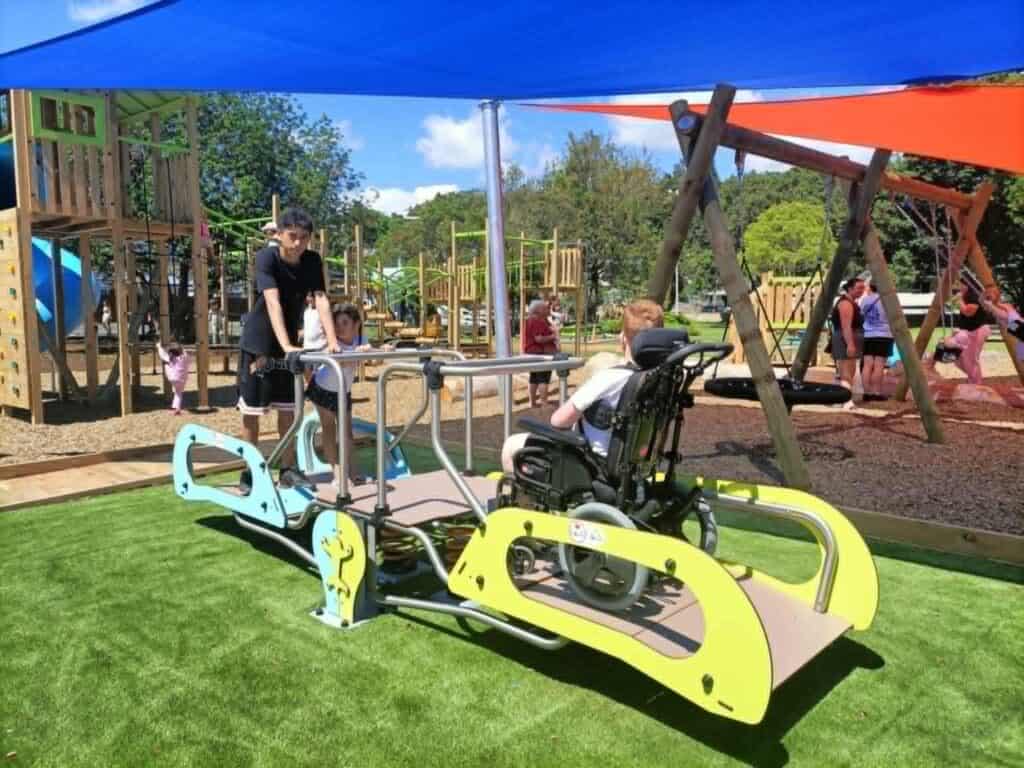
Accessible equipment should allow children and adults to participate without requiring manual lifting.
Examples include:
wheelchair-accessible swings
inclusive seesaws
transfer platforms
sensory play elements
ground-level interactive equipment
These designs allow users to engage in play with greater independence and dignity.
4. Space for Mobility Devices
Modern powered wheelchairs and mobility scooters are larger than many traditional design assumptions.
Inclusive playgrounds provide:
generous turning circles
space beside equipment for positioning
unobstructed circulation routes
seating areas for carers and family members
Designing for mobility devices ensures that people can approach, use, and leave equipment safely.
5. Play for All Ages and Abilities
Accessible playgrounds should support intergenerational use, recognising that disability is not limited to childhood.
Inclusive play spaces benefit:
children with disabilities
older wheelchair users
stroke survivors
grandparents with limited mobility
families with prams or pushchairs
Designing for a wide range of users creates spaces that are welcoming for the entire community.
The Goal of Inclusive Play
The goal of accessible playground design is simple:
People of all abilities should be able to reach, move through, and participate in play spaces safely and independently.
When these principles are applied thoughtfully, playgrounds become places where everyone can experience movement, connection, and joy.