Elopement Behavior
Elopement Behaviour
Understanding Safety, Inclusion, and Reducing Stigma
What Is Elopement Behaviour?
Elopement behaviour is when a child or individual leaves a safe or supervised area without warning.
It can happen quickly and often without any clear signal to others. You may also hear this described as wandering elopement.
In simple terms, it means moving away from safety, sometimes toward something of interest, and sometimes away from something that feels overwhelming.
This behaviour is not about being difficult or disobedient. It is a response.
Why Eloping Behaviour Happens
Eloping behaviour usually has a reason, even if it is not immediately obvious.
A child may be drawn toward something they enjoy, such as water, movement, or open space. They may also be trying to leave an environment that feels too loud, confusing, or unpredictable.
For some children, especially those with communication differences, movement becomes a way of expressing a need.
Understanding the “why” behind elopement behaviour helps shift the focus from control to support.
Addressing Stigma
Elopement behaviour is often misunderstood in public spaces.
When a child runs or moves away suddenly, people may assume the child is behaving poorly or that there is a lack of supervision. This can lead to judgment toward families who are already managing a high level of risk.
Eloping behaviour is not about parenting failure. It is about safety and understanding.
When communities recognise this, they become more supportive and inclusive.
Safety Risks
Elopement behaviour can present serious risks, particularly in open or busy environments.
Children may move quickly toward roads, car parks, or water. They may not recognise danger or respond when called.
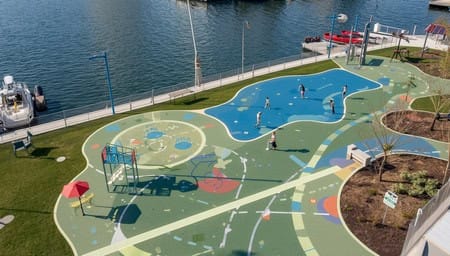
In playgrounds and parks, this can mean leaving the play area unnoticed or becoming separated from caregivers.
The speed and unpredictability of eloping behaviour make it a key safety consideration in any public space.
Safer environments reduce risk without removing freedom.
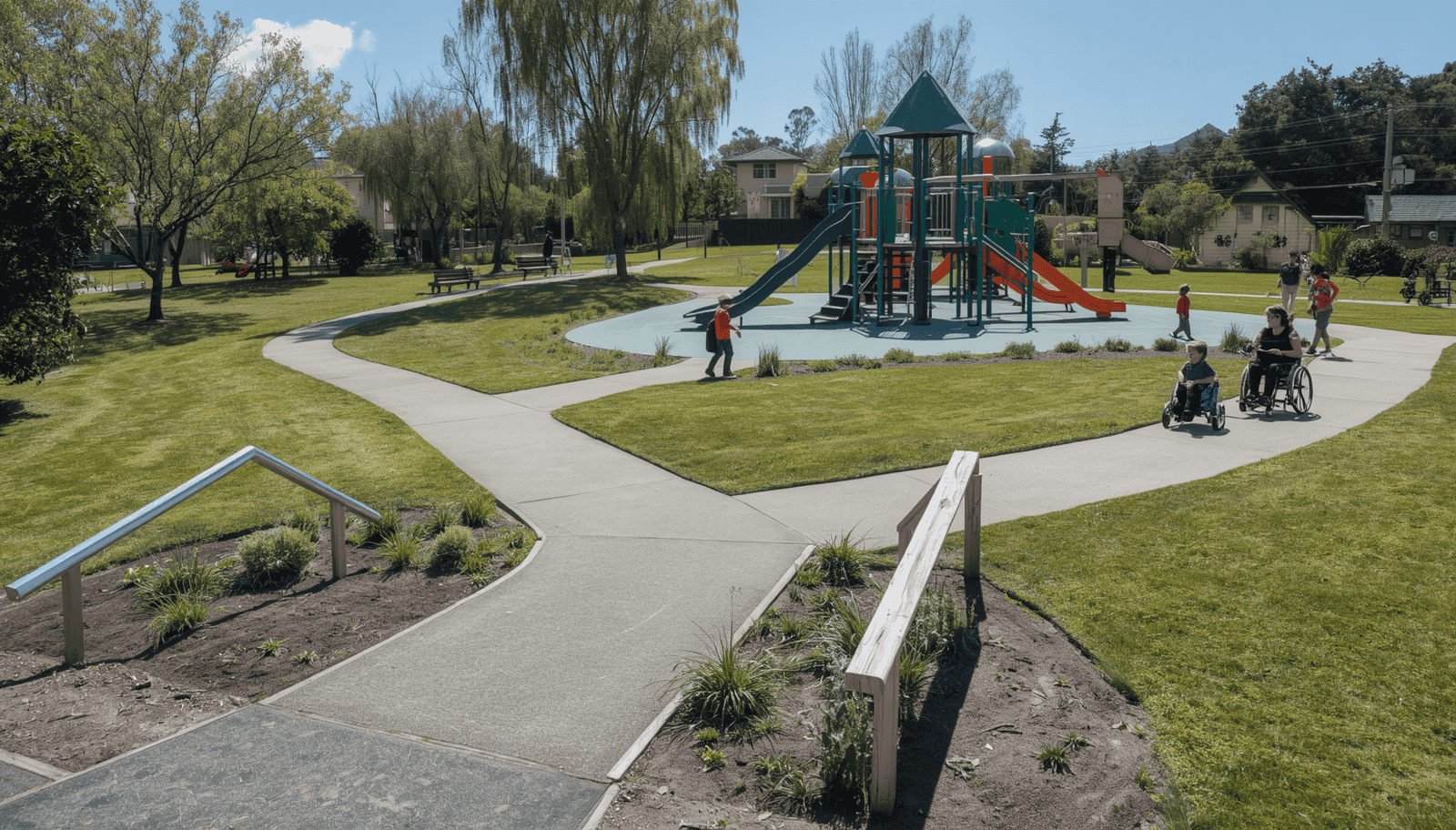
Clear sightlines allow caregivers to maintain visual contact at all times. Open, well-planned layouts make it easier to respond quickly.
Boundaries may be appropriate in higher-risk areas, such as near water or traffic. This does not mean every space should be fenced, but risk needs to be considered carefully.
Predictable environments also help. When children feel comfortable and engaged, the need to leave is often reduced.
Providing opportunities for movement, sensory regulation, and quiet spaces can help children stay safely within the environment.
Supervision remains essential, and the design should support caregivers rather than make their role more difficult.
Designing for Inclusion and Safety
Inclusive design must reflect how spaces are actually used.
Elopement behaviour is part of real-world experience for many families. Ignoring it creates environments that are technically accessible but not truly safe.
Good design balances independence with safety, allowing children to explore while reducing risk.
This is a key part of creating inclusive playgrounds that work for everyone.
Elopement behaviour is a response to the environment, not a problem to be punished.
When we understand eloping behaviour and remove the stigma, we create safer, more supportive, and more inclusive spaces for all children.
Inclusive World NZ Elections 2026 Project
Inclusive Play, Accessibility and the New Zealand Election 2026
Government and council decisions influence playground funding, accessibility standards, inclusive design and the development of public spaces that welcome disabled children and adults. Inclusive World New Zealand has created an Elections 2026 resource exploring the disability policies and public decisions that could shape more accessible communities across Aotearoa New Zealand.
Accessible Communities
Explore election issues involving accessible public spaces, housing, transport, community facilities and inclusive local infrastructure.
Explore Accessible CommunitiesDisabled Children and Inclusion
Learn about policies affecting disabled children, inclusive education, recreation, participation and equal opportunities within their communities.
View Issues Affecting Disabled ChildrenDisability Rights and Accountability
Read about disability rights, accessibility obligations, public consultation and the responsibility of governments and councils to remove barriers.
Explore Rights and AccountabilityPolitical Party Disability Policies
Follow political party commitments relating to disability, accessibility, community infrastructure and inclusion during the 2026 election campaign.
Compare Disability PoliciesVisit the complete Inclusive World NZ Elections 2026 Disability Hub for political party policies, disability legislation, community opinions, sector responses and election news affecting disabled New Zealanders.
Visit the Elections 2026 Disability Hub