Carer & Family Needs
Carer & Family Needs
Why Carer and Family Needs Matter in Inclusive Playgrounds
Inclusive playgrounds are not just designed for children.
They are designed for families.
Every disabled child arrives with a parent, caregiver, sibling, or support person. If the space does not work for the whole family, it does not work at all.
Research shows that barriers in playgrounds affect not only the child but also the well-being, participation, and sense of belonging of the entire family.
Inclusive design must consider the full experience from arrival to play, to rest, to leaving.
Play Is a Shared Experience
Playgrounds are social spaces.
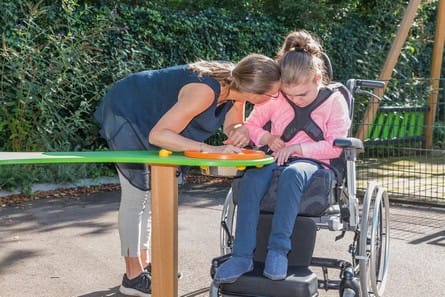
Children play, but families support, supervise, and participate. Siblings play together. Parents watch, guide, and help. Caregivers assist with movement, communication, and safety.
A well-designed playground allows:
Families to stay together
Carers to remain close without barriers
Shared experiences across all abilities
If a child can access the equipment but their parent cannot easily reach them, the design has failed.
Inclusion means designing for relationships, not just individuals.
Access Must Work for Everyone
Accessible design starts before play begins.
Families need:
Accessible parking
Safe, direct pathways
Clear entry points
Easy navigation
If access is difficult, stressful, or confusing, families may choose not to visit at all.
Inclusive design reduces effort, removes stress, and supports independence for both the child and the caregiver.
Space for Supervision and Support
Carers need to stay close.
This means providing:
Clear sightlines across the playground
Seating near play areas
Space to move alongside children
Room to assist without blocking others
Playgrounds should allow a caregiver to supervise safely without standing in pathways or struggling to reach a child.
Design must support real-world use, not ideal conditions.
Seating for Carers Is Essential
Caregivers often spend long periods in playgrounds.
Accessible seating allows them to:
Rest while supervising
Stay close to their child
Remain comfortable and engaged
Guidance on inclusive playgrounds highlights the importance of providing seating and rest areas as part of a balanced, accessible environment.
Without seating, carers are forced to stand, sit on unsuitable surfaces, or leave early.
Design for Siblings and Whole Families
Inclusive playgrounds must work for all children in a family, not just one.
This means:
Play opportunities for different ages and abilities
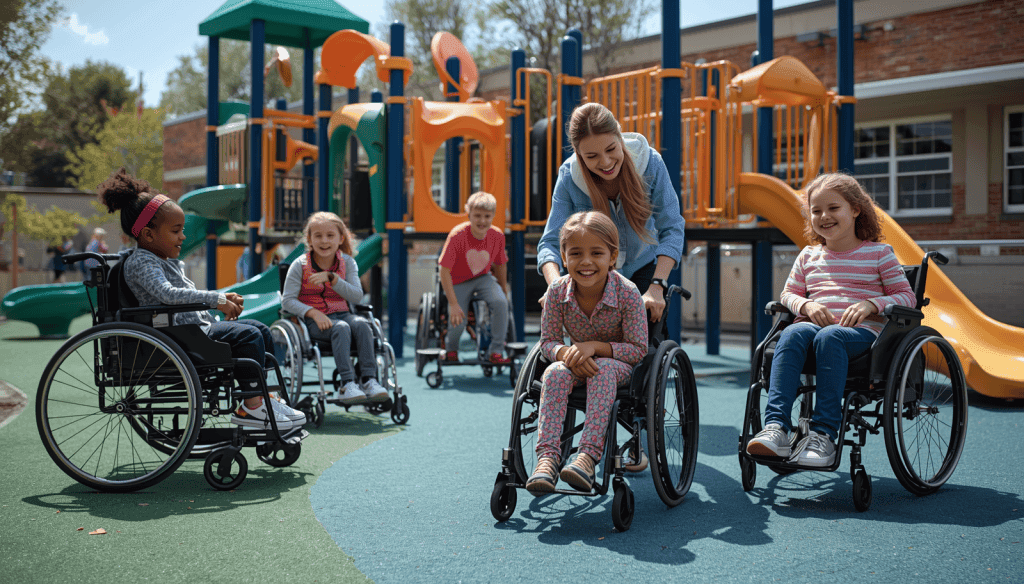
Shared play experiences
Spaces where siblings can interact with each other.
Universal design principles emphasise creating environments usable by the widest range of people, without separation or special treatment.
A playground that separates children by ability creates exclusion within the family.
A playground that brings them together creates inclusion.
Support for Different Levels of Independence
Not all children play independently.
Some require:
Physical assistance
Supervision at all times
Communication support
Emotional reassurance
Playground design should allow carers to assist easily without creating congestion or safety risks.
This includes:
Wide pathways
Open layouts
Accessible equipment zones
Good design supports both independence and assistance.
Toilets, Changing, and Basic Needs
Families plan outings around basic needs.
Accessible toilets, Changing Places facilities, and nearby water access are essential for:
Comfort
Dignity
Extended visits
Without these, families may:
Limit their time
Avoid the space
Experience stress or discomfort
Inclusion must consider the full duration of a visit, not just play time.
Safety and Predictability
Caregivers need to feel confident in the environment.
This means:
Safe, enclosed areas where appropriate
Clear boundaries
Good visibility
Predictable layouts
For some children, especially those with sensory or cognitive differences, unpredictable environments can create risk.
Good design supports both freedom and safety.
Quiet Spaces and Sensory Break Areas
Playgrounds can be overwhelming.
Some children need space to:
Regulate emotions
Take a break from the noise
Step away from the activity
Providing quiet areas allows families to stay longer and reduces stress.
These spaces are just as important as active play zones.
Time, Effort, and Real-Life Use
Families often put significant effort into planning outings.
Research highlights that disabled children and their families frequently face additional barriers and must exert more effort just to access public spaces.
Good design reduces that effort.
It allows families to arrive, settle, and enjoy the space without constant problem-solving.
Inclusive playgrounds should feel easy.
Carers Are Part of the Design Brief
Too often, playgrounds are designed with a focus only on the child.
But carers are part of every interaction.
They:
Lift, guide, and support
Manage safety
Communicate and assist
Make decisions about staying or leaving
If the playground does not work for the carer, it does not work for the child.
Design must include them from the beginning.
Common Mistakes
Carer and family needs are often overlooked.
No seating near play areas
Poor visibility across the playground
Difficult access routes
No space to assist children
Lack of toilets or changing facilities
No quiet or retreat areas
These issues create stress and reduce usability.
They are not minor oversights; they are barriers.
A Lived Experience View
From lived experience, a playground is never used by one person.
It is used by a family.
If one part of that experience fails, access, seating, toilets, and layout, the whole visit is affected.
Families remember how easy or difficult a place felt.
They return to places that work.
They avoid places that do not.
Final Thought
Inclusive playgrounds are not just about accessible equipment.
They are about supporting the full experience of families.
When carers are supported, children are supported.
When families feel comfortable, they stay longer.
When everyone can participate, inclusion becomes real.
Because playgrounds are not just for children.
They are for the people who support them, care for them, and share the experience with them.