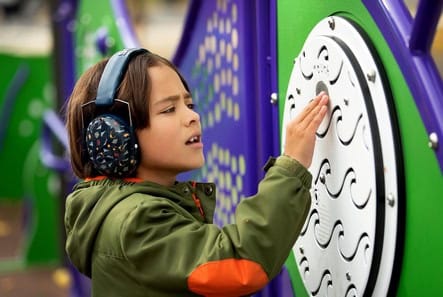
Sensory-Friendly Spaces
Sensory-Friendly Spaces
Why Sensory-Friendly Spaces Matter in Inclusive Playgrounds
Not all children experience the world in the same way.
For some, playgrounds are exciting and energising. For others, they can be overwhelming, unpredictable, and stressful.
Sensory-friendly spaces are designed to support children who experience sensory processing differences, including autistic children, neurodivergent children, and those with anxiety or developmental differences.
These spaces allow children to engage, regulate, and participate in ways that work for them.
Inclusion means creating environments where every child can feel safe, comfortable, and able to play.
Understanding Sensory Needs
Children interact with the world through their senses.
This includes:
Sight
Sound
Touch
Movement (balance and body awareness)
A well-designed sensory space recognises that children may be:
Over-sensitive (easily overwhelmed)
Under-sensitive (seeking more input)
A mix of both, depending on the situation
Sensory-friendly environments help children regulate their responses and feel more in control of their surroundings.
There is no single “right” level of stimulation; good design provides choice.
Balance Stimulation and Calm
Inclusive playgrounds should not be either loud and busy or completely quiet.
They should provide a balance.
This includes:
Active sensory play areas
Moderate transition zones
Quiet retreat spaces
Design guidance recommends creating different sensory zones so children can move between stimulation levels depending on how they feel.
This allows children to stay longer, rather than becoming overwhelmed and leaving.
Provide Quiet and Retreat Spaces
One of the most important features of a sensory-friendly playground is a place to step away.
Quiet spaces allow children to:
Regulate emotions
Reduce sensory overload
Feel safe and secure
Take a break without leaving the playground
These spaces may include small shelters, tunnels, seating areas, or natural spaces away from activity.
Design guidance highlights that quiet, enclosed areas help children with sensory challenges reset and re-engage with play when ready.
Without these spaces, many children cannot stay.
Avoid Sensory Overload
Too much stimulation can be just as limiting as too little.
Common causes of overload include:
Excessive noise
Crowded layouts
Bright or flashing lights
Complex visual patterns
Design should reduce unnecessary sensory input, especially at entrances and transition areas, where children are still adjusting to the environment.
A playground should feel welcoming, not overwhelming, from the moment a child arrives.
Create Predictable and Easy-to-Understand Spaces
Predictability reduces anxiety.
Children should be able to understand:
Where they are
Where to go next
What to expect
This can be supported through:
Clear layout and zoning
Consistent design features
Simple wayfinding and signage
Research shows that structured, predictable environments help neurodivergent children feel more comfortable and confident navigating spaces.
Confusion creates stress. Clarity creates confidence.
Offer Multi-Sensory Play Opportunities
Sensory-friendly design is not about removing stimulation, it is about offering it in a controlled, meaningful way.
Inclusive playgrounds should include opportunities to engage:
Touch through textures and materials
Sound through musical elements
Movement through swings, spinning, and balance
Visual input through colour and light
Multi-sensory play supports development, learning, and enjoyment for all children.
The key is to offer choice, not to force one type of experience.
Use Natural Elements Where Possible
Nature plays a powerful role in sensory design.
Sensory gardens and natural spaces can include:
Plants with different textures and scents
Water features for sound and touch
Natural materials like wood and stone
These environments provide rich sensory experiences in a calming and accessible way.
Natural spaces often feel less overwhelming than highly structured environments.
Design for Movement and Body Awareness
Many children seek movement as a way to regulate their bodies.
This includes:
Swinging
Rocking
Spinning
Climbing
These activities support balance and body awareness, often referred to as vestibular and proprioceptive input.
Repetitive, rhythmic movement can be calming and help children feel more grounded.
Movement is not just play; it is regulation.
Surface and Material Choices Matter
The feel of a space is just as important as its appearance.
Surfaces should be:
Smooth and accessible for mobility
Varied enough to provide tactile interest
Safe and comfortable underfoot
Guidance recommends balancing sensory-rich materials with surfaces that remain easy to navigate for mobility users.
A sensory space must not create physical barriers.
Support Different Types of Play
Sensory-friendly playgrounds should support a range of play styles.
This includes:
Active play
Quiet play
Parallel play (playing alongside others)
Social play
Independent play
Children may move between these types depending on how they feel.
Providing options allows children to engage in their own way.
Design for Transition, Not Just Zones
Transitions between areas are important.
Moving from a quiet space to a busy play zone should feel gradual, not sudden.
This can be achieved through:
Changes in colour or material
Soft boundaries
Gradual increase in activity
A sudden shift from calm to chaos can trigger sensory overload.
Good design creates smooth transitions.
A Lived Experience View
From lived experience, sensory-friendly design is often the difference between inclusion and exclusion.
Without it, some children cannot stay, cannot engage, and cannot enjoy the space.
With it, those same children can:
Feel safe
Regulate their emotions
Explore at their own pace
Participate alongside others
Sensory-friendly spaces are not separate spaces.
They are essential spaces.
Final Thought
Inclusive playgrounds must support how children feel, not just how they move.
Sensory-friendly spaces recognise that every child experiences the world differently.
They provide choice, balance, and control.
Because when a child feels safe, they can play.
And when they can play, they can belong.