Community Access Equipment
Community Access Equipment
Why This Matters
Accessibility does not stop at the playground.
For many people, the biggest barrier is getting there — and being able to move once they arrive.
Community access equipment helps bridge that gap.
It provides the tools people need to participate in public spaces, not just exist alongside them.
What Community Access Equipment Is
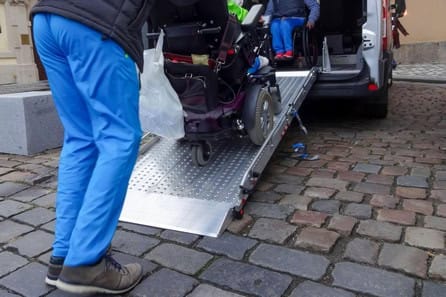
Community access equipment includes shared or publicly available mobility and support tools.
This can include:
Wheelchairs
Mobility scooters
Walking frames
Assistive devices
These are often provided by councils, libraries, or community organisations to support access and participation.
In many New Zealand communities, wheelchairs and mobility aids are available for short-term use in public spaces such as libraries and civic centres.
This is about removing barriers at the point of use.
Access Is Not Just About Design
A playground can be perfectly designed.
But if a person cannot reach it or move within it, it is still inaccessible.
Community access equipment supports:
Arrival
Movement
Participation
It fills the gap between infrastructure and real-world use.
Mobility Equipment Enables Independence
Mobility equipment, such as scooters and wheelchairs, allows people to:
Move freely
Travel longer distances
Engage with their community
Mobility scooters, for example, allow people to get out and participate in everyday life without relying on others.
This is not convenient.
It is independence.
Short-Term Access Is Critical
Not everyone owns mobility equipment.
Some people need:
Temporary support
Occasional assistance
Equipment for specific outings
Community-provided equipment allows people to:
Try experiences
Visit new places
Participate without long-term cost
Equipment loan systems are widely used to support independence and participation without requiring ownership.
This removes a major barrier.
Location Matters
Community access equipment must be:
Easy to find
Easy to access
Located where it is needed
This includes:
Near entrances
At key facilities
Close to high-use areas
If equipment is hidden or difficult to access, it will not be used.
Maintenance and Reliability Are Essential
Providing equipment is not enough.
It must be:
Maintained
Charged
Ready to use
In real-world situations, equipment is often removed for repair and not returned quickly.
This creates:
Loss of access
Loss of independence
Reduced trust
If equipment is not reliable, people stop depending on it.
Design Must Support the Equipment
Community equipment only works if the environment supports it.
This means:
Wide pathways
Smooth surfaces
Adequate turning space
Safe transitions
A mobility scooter or wheelchair cannot function on:
Loose surfaces
Narrow paths
Uneven ground
Equipment and environment must work together.
Charging and Storage Considerations
Some equipment requires infrastructure.
For example:
Mobility scooters need charging
Powered devices need storage
Public facilities are increasingly providing:
Charging stations
Safe storage areas
These small additions make a big difference to usability.
Community Equipment Supports Inclusion
Community access equipment allows more people to:
Visit public spaces
Stay longer
Participate fully
It supports:
Families
Visitors
Older adults
People with temporary or permanent disabilities
Inclusion increases when barriers are removed.
The Risk of Low Priority
One of the biggest real-world issues is priority.
When equipment breaks:
It is removed
It is delayed
It is forgotten
This often happens because decision-makers do not rely on the equipment themselves.
But for users:
That equipment may be the difference between going out and staying home.
Access Once Removed Is Hard to Restore
When community equipment disappears:
People lose confidence
Habits change
Participation drops
Even when equipment is returned, usage may not be.
Consistency matters.
Design for Real Use
Community access equipment must be:
Visible
Reliable
Integrated into the space
It should feel like a normal part of the environment — not a special feature.
If it feels separate, it will be underused.
A Lived Experience Reality
From lived experience, the impact is immediate.
A piece of equipment is either:
Available and working
Or not there at all
There is no workaround.
If it is not there, access is gone.
Community Equipment Is Not an Extra
It is often treated as optional.
It is not.
It is part of the accessibility system.
Without it:
Some people cannot participate
Cannot reach spaces
Cannot stay engaged
Final Thought
Community access equipment connects people to places.
It turns design into real-world access.
It supports independence, participation, and inclusion.
But only if it is:
Available
Maintained
Designed for real use
Because inclusion is not just about building accessible spaces.
It is about making sure people can actually use them.
Inclusive World NZ Elections 2026 Project
Inclusive Play, Accessibility and the New Zealand Election 2026
Government and council decisions influence playground funding, accessibility standards, inclusive design and the development of public spaces that welcome disabled children and adults. Inclusive World New Zealand has created an Elections 2026 resource exploring the disability policies and public decisions that could shape more accessible communities across Aotearoa New Zealand.
Accessible Communities
Explore election issues involving accessible public spaces, housing, transport, community facilities and inclusive local infrastructure.
Explore Accessible CommunitiesDisabled Children and Inclusion
Learn about policies affecting disabled children, inclusive education, recreation, participation and equal opportunities within their communities.
View Issues Affecting Disabled ChildrenDisability Rights and Accountability
Read about disability rights, accessibility obligations, public consultation and the responsibility of governments and councils to remove barriers.
Explore Rights and AccountabilityPolitical Party Disability Policies
Follow political party commitments relating to disability, accessibility, community infrastructure and inclusion during the 2026 election campaign.
Compare Disability PoliciesVisit the complete Inclusive World NZ Elections 2026 Disability Hub for political party policies, disability legislation, community opinions, sector responses and election news affecting disabled New Zealanders.
Visit the Elections 2026 Disability Hub