Wheelchair Accessible Swings
Wheelchair Accessible Swings
Why This Matters
Swinging is one of the most loved playground experiences.
It provides movement, rhythm, and joy.
But for many children, traditional swings are not usable.
If a child cannot get onto the swing, they cannot take part.
Inclusive design must ensure that everyone can experience movement — not just watch it.
The Problem With Traditional Swings
Standard swings rely on:
Climbing on
Balancing independently
Strong core control
This immediately excludes:
Wheelchair users
Children with limited mobility
Children who need support to sit
Traditional swings were not designed for inclusion.
They were designed for one type of user.
Different Types of “Accessible” Swings
Not all accessible swings are the same.
Some require transfer:
Bucket seats
Harness swings
Supportive seats
These can work for some users.
But not for everyone.
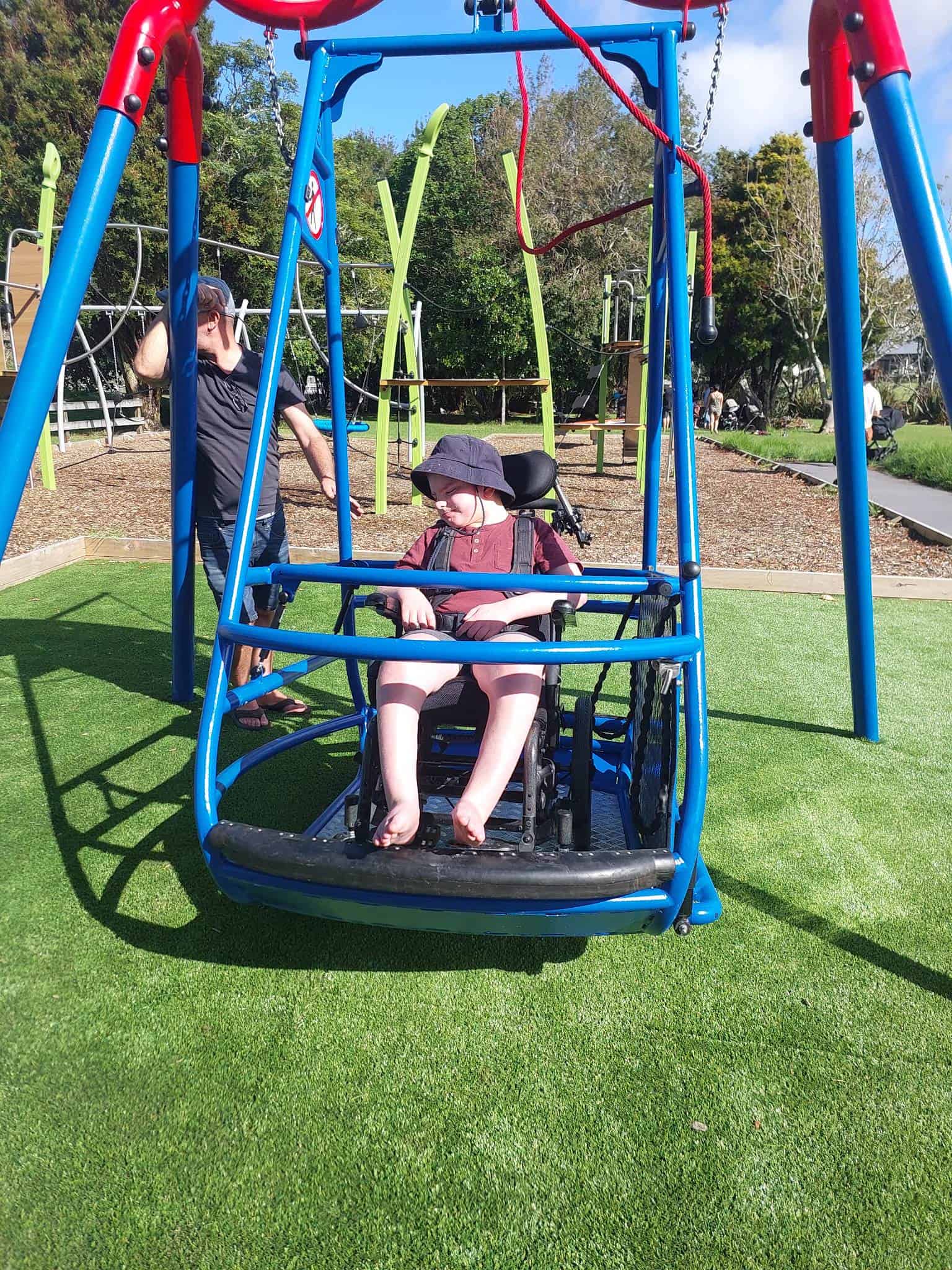
True wheelchair-accessible swings allow users to:
Stay in their wheelchair
Roll directly onto the swing
Participate without transferring
Design guidance highlights that both transfer-based and roll-on options exist — but only some provide full access for all users.
This distinction matters.
No-Transfer Design Changes Everything
Modern inclusive swings are designed so users can:
Roll on via a ramp
Enter at ground level
Stay in their chair
Some systems include a platform connected to a ramp, allowing direct roll-on access without needing to transfer.
This removes the biggest barrier.
It creates real inclusion.
Shared Play — Not Separate Play
Inclusive swings are not just for one user.
They are designed so:
Wheelchair users and other children can swing together
Caregivers can assist if needed
Social interaction happens naturally
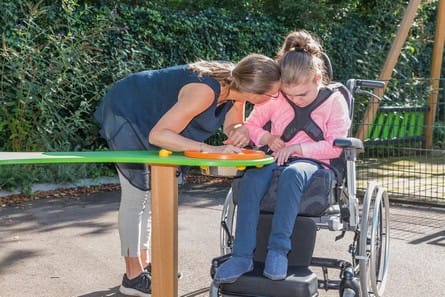
Inclusive playground design emphasises face-to-face and shared play experiences as a key part of inclusion.
This is what turns access into participation.
Safety Is a Major Design Factor
Wheelchair swings must handle:
High combined weight (often 200 kg+)
Dynamic movement
Different positioning
This requires:
Strong structural design
Secure entry systems
Controlled movement
Some designs also include harnesses or secure seating to ensure a safe experience for users who need additional support.
Safety is not optional.
It determines whether the equipment is used.
Entry and Exit Must Be Simple
Access must be easy.
This means:
Level or ramped entry
Enough space to position
Clear, unobstructed access
If a child cannot:
Get on easily
Position safely
Exit without difficulty
They will not use the equipment.
Access must work in real life.
Space Around the Swing Matters
Wheelchair swings require more than just the swing itself.
They need:
Turning space
Approach space
Clear safety zones
Wheelchair swing systems often require large safety areas around them to operate safely.
If the surrounding space is not designed properly, access fails.
Surface Is Critical
The surface leading to the swing must be:
Firm
Stable
Level
Loose surfaces like bark or sand:
Prevent access
Increase effort
Stop movement
If a wheelchair cannot reach the swing, it cannot be used.
If It Feels Unsafe, It Will Not Be Used
Caregivers decide quickly.
They look at a swing and ask:
Is this safe?
Can my child use this?
If there is doubt:
They do not try it
They do not risk it
They leave
Inclusive design only works when people feel confident.
The Problem With Poorly Designed Swings
Some swings are installed with good intentions, but fail in use.
Common issues include:
Difficult access
Unstable platforms
Overly complex entry
Isolation from the main playground
Real-world examples show that equipment placed away from the main play area or poorly maintained can become underused or removed entirely due to safety concerns.
This is not a demand issue.
It is a design issue.
If It’s Not Used, It’s Not Inclusive
We often hear:
“The wheelchair swing is not being used".
The real reasons are:
It is hard to access
It feels unsafe
It is not integrated into play
Use is the only true measure of inclusion.
Integration Into the Playground Matters
Wheelchair swings should be:
Part of the main play space
Connected by accessible pathways
Visible and easy to reach
Inclusive playgrounds are designed so children of all abilities can play together, not separately.
If the swing is isolated, it becomes exclusion.
A Lived Experience Reality
From lived experience, the difference is immediate.
A swing either:
Feels safe and usable
Or feels difficult and risky
A child either:
Gets on
Or stays off
That decision happens instantly.
Design for Real Use — Not Just Installation
Adding a wheelchair swing is not enough.
It must be:
Accessible
Safe
Integrated
Easy to use
Otherwise, it becomes equipment that looks inclusive but is not used.
Final Thought
Wheelchair-accessible swings are about more than movement.
They are about inclusion.
They allow children who were previously excluded to:
Experience play
Join in socially
Feel part of the space
But only if they are designed properly.
Because inclusion is not about installing equipment.
It is about making sure it works — safely, confidently, and in real life.