Safety Near Water
Safety Near Water
Why This Matters
Water is highly attractive.
For many children, especially those with sensory needs, water is calming, engaging, and difficult to resist.
But water also introduces risk.
Inclusive playground design must balance freedom to play with real-world safety.
Because if a space feels unsafe, families will not stay.
Water Is a Strong Sensory Attraction
Water provides:
Movement
Sound
Reflection
Tactile feedback
Design guidance recognises that water is a powerful sensory element for many children, including those with autism and sensory processing differences.
This attraction is not optional.
It must be expected and designed for.
Risk Is Real — Not Theoretical
Water introduces risks that cannot be ignored.
These include:
Wandering toward water
Slips and falls
Unpredictable behaviour
Limited awareness of danger
Some children are drawn to water without understanding the risk.
This is not misbehaviour.
It is part of how they experience the environment.
Safety Must Come Before Use
Caregivers make fast decisions.
They assess:
Distance to water
Barriers or protection
Visibility
Escape routes
If something feels unsafe, they leave.
It does not matter how good the playground is.
If water risk is not managed, the space will not be used.
Fencing — When It Is Necessary
Fencing is often debated in inclusive design.
It can feel restrictive.
But near water, it can be essential.
Design guidance highlights that an enclosure can reduce wandering risk and provide peace of mind for caregivers.
In these situations, fencing is not an exclusion.
It is protection.
Design Without Creating Barriers
Safety does not always mean hard barriers.
Alternative approaches include:
Natural boundaries (planting, terrain)
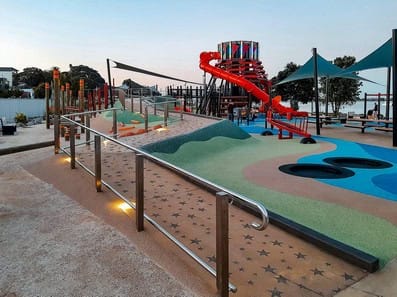
Changes in level or surface
Clear visual edges
These can guide movement without making the space feel closed.
The goal is not to restrict.
It is to reduce risk.
Visibility Is Critical
Caregivers need to see water areas clearly.
Design should ensure:
Clear sightlines
No hidden edges
Open views across the space
If water is out of sight, risk increases.
If it is visible, supervision improves.
Distance and Separation Matter
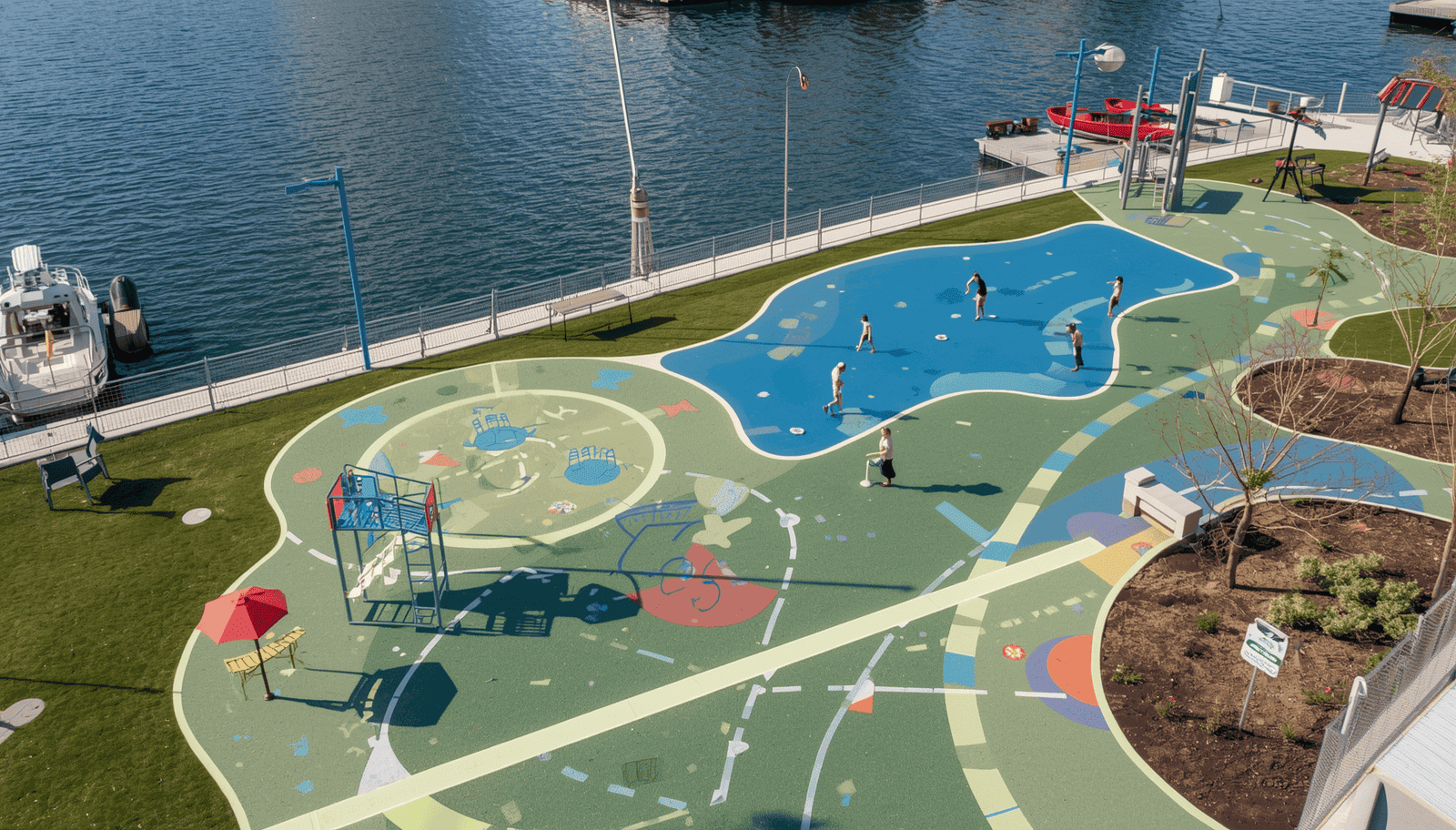
Water features should be positioned carefully.
Consider:
Distance from main play areas
Clear separation between zones
Safe pathways around water
Children should not accidentally move from active play directly into water.
Transitions must be intentional.
Surface Safety Near Water
Water increases slip risk.
Surfaces must be:
Non-slip
Stable
Consistent
Wet conditions change how surfaces behave.
Design must account for this.
If a surface becomes unsafe when wet, it is not suitable.
Controlled Access to Water Play
Water play can be included safely.
This may involve:
Shallow water features
Controlled flow elements
Interactive water play zones
Design guidance emphasises that water features should be designed with safety as the primary consideration.
Children should be able to engage safely, not be exposed to uncontrolled risk.
Support for Caregivers
Caregivers need to:
Stay close
Move easily
Intervene quickly if needed
Design should provide:
Seating near water areas
Clear access routes
Space to assist
If a caregiver cannot respond quickly, the design has failed.
Avoid Unpredictable Hazards
Unexpected elements create risk.
This includes:
Hidden drops
Sudden depth changes
Unmarked edges
Design must be:
Predictable
Clear
Easy to understand
Children should not encounter surprises near water.
Balance Risk and Inclusion
Play should include challenge.
But water risk is different.
It requires:
Higher levels of control
Clear boundaries
Thoughtful design decisions
Inclusive design is not about removing all risk.
It is about managing it properly.
Real-World Behaviour
In real playgrounds:
Children move quickly
They explore without warning
They are drawn to water instinctively
Design must expect this behaviour.
Not assume controlled use.
A Lived Experience Reality
From lived experience, the decision is immediate.
A caregiver arrives and sees:
Water too close
No barrier
Limited visibility
And they leave.
It happens that quickly.
Inclusion Only Works When People Feel Safe
A playground near water can be inclusive.
But only if it feels safe.
If families feel:
Confident
In control
Able to supervise
They stay.
If not, they go.
Final Thought
Water is powerful.
It attracts, engages, and calms.
But it also introduces real risk.
Inclusive playground design must respect both.
Because inclusion is not just about access.
It is about creating spaces where people feel safe enough to stay.
And if they do not feel safe, they will not use it.