UNCRPD and Accessibility in Practice
UNCRPD and Accessibility in Practice
What Is the UNCRPD?
The United Nations Convention on the Rights of Persons with Disabilities (UNCRPD) is an international human rights agreement that New Zealand signed in 2007 and ratified in 2008.
It does not create new rights.
Instead, it sets out how existing human rights must apply to disabled people, ensuring they can live, participate, and access the world on an equal basis with others.
At its core, the UNCRPD is about one simple idea:
Disabled people have the same rights as everyone else, and those rights must be delivered in practice.
From Theory to Practice
The UNCRPD is not about policy documents.
It is about real life.
It requires governments, councils, and organisations to remove barriers so disabled people can:
Access public spaces
Participate in community life
Use services independently
Article 9 of the Convention specifically addresses accessibility, requiring access to public environments, services, and facilities.
This includes playgrounds.
Not as optional spaces but as part of everyday life.
The Shift in Thinking
The UNCRPD represents a major shift in how disability is understood.
It moves away from:
Charity
Medical models
Special treatment
And towards:
Rights
Participation
Equality
It recognises that disability is not just about a person’s condition, it is about the barriers created by the environment.
If the environment creates barriers, it creates disability.
If the environment removes barriers, it creates inclusion.
What This Means for Playgrounds
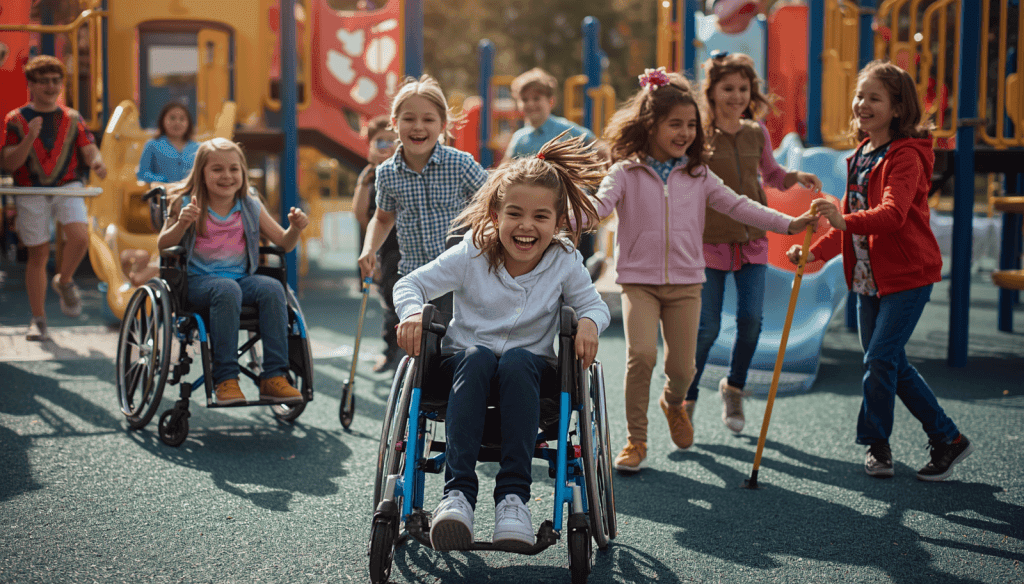
Playgrounds are public spaces.
That means they must be accessible and usable by everyone.
Under the UNCRPD, this includes:
Physical access
Meaningful participation
Equal opportunity to engage
It is not enough to provide a pathway to the playground.
Children must be able to:
Play
Interact
Be part of the experience
Inclusion is not about reaching the space.
It is about using the space.
Accessibility Is a Right — Not a Feature
The UNCRPD makes it clear:
Accessibility is not optional.
It is a human right.
This means:
It cannot be treated as an upgrade
It cannot be removed to reduce cost
It cannot be limited to minimum compliance
When accessibility is treated as a feature, it becomes something that can be negotiated.
When it is understood as a right, it becomes essential.
Reasonable Accommodation in Practice
The UNCRPD introduces the concept of reasonable accommodation.
This means making necessary adjustments so disabled people can participate equally, without placing an unreasonable burden on providers.
In playground design, this translates to:
Adjusting layouts to allow access
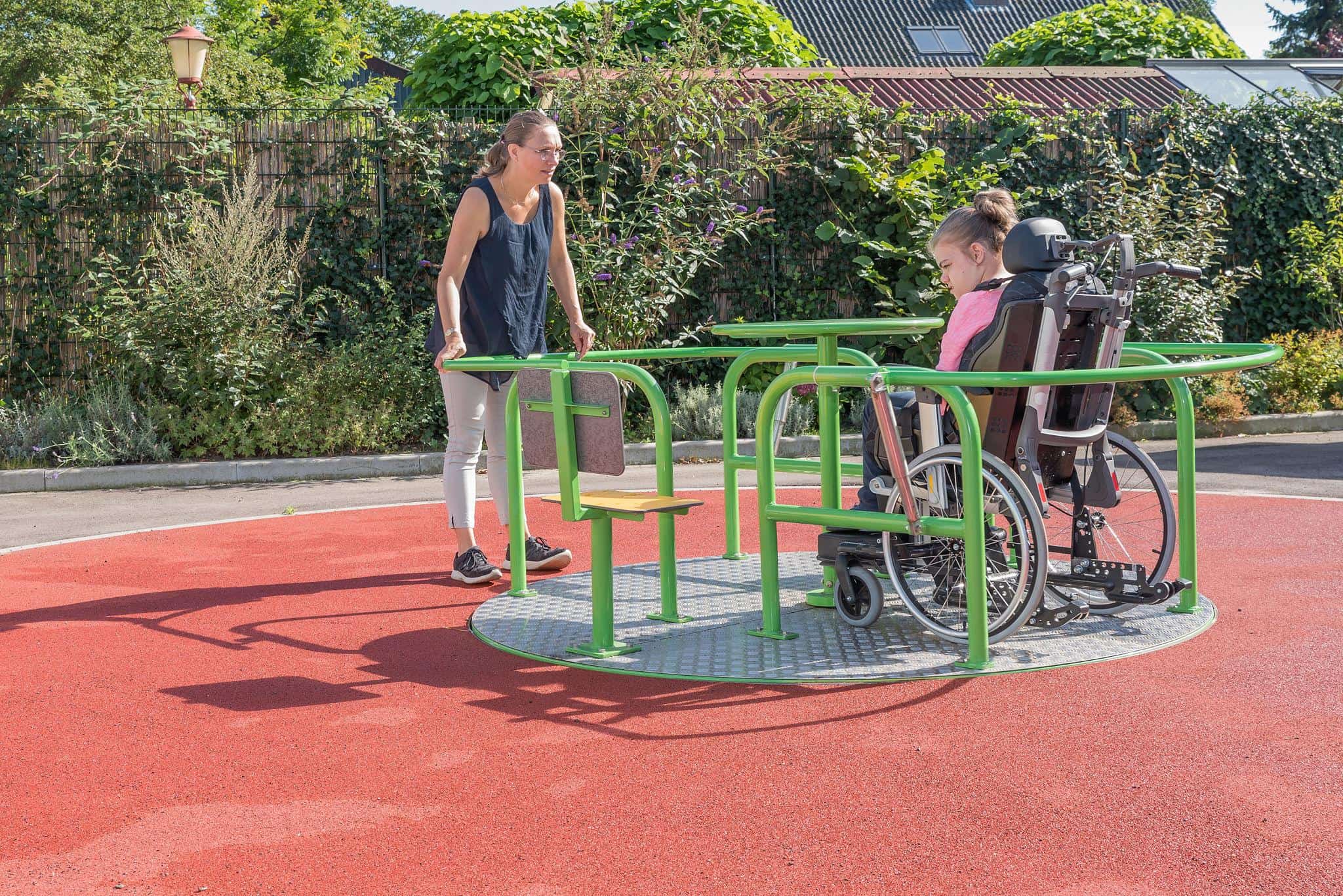
Providing inclusive equipment
Designing for carers and families
Ensuring safe and usable environments
It is about adapting the environment, not expecting the person to adapt.
Progressive Realisation — But Not Inaction
The Convention allows countries to implement changes over time.
This is called progressive realisation
But this does not mean doing nothing.
It means:
Continuous improvement
Clear direction
Ongoing commitment
In practical terms:
Every new playground should be better than the last.
Repeating known mistakes is not acceptable.
The Gap Between Policy and Reality
New Zealand has committed to the UNCRPD.
But there is still a gap between commitment and experience.
This gap exists because:
Standards focus on minimum access
Budgets prioritise cost over usability
Design decisions ignore lived experience
The result is spaces that:
Meet requirements
But do not work for real people
The UNCRPD exists to close that gap.
Inclusion Requires More Than Compliance
Compliance is about rules.
Inclusion is about outcomes.
A playground can be compliant and still:
Feel unsafe
Be difficult to use
Exclude certain users
The UNCRPD pushes beyond compliance.
It asks:
Can people actually participate?
Can they do so independently?
Do they feel included?
These are the real measures of success.
Lived Experience Is Central
One of the strongest principles of the UNCRPD is participation.
Disabled people must be involved in decisions that affect them.
This includes:
Planning
Design
Evaluation
New Zealand helped shape the Convention by including disabled people in its development.
That same principle must apply locally.
You cannot design inclusion without the people you are designing for.
Play Is Part of Participation
The UNCRPD recognises participation in all areas of life.
This includes:
Recreation
Leisure
Community activities
Playgrounds are part of that.
They are not just places to play.
They are places where children:
Build relationships
Develop confidence
Experience inclusion
Excluding a child from play is not a minor issue.
It is a failure of their right to participate.
What Accessibility Looks Like in Practice
Applying the UNCRPD to playgrounds means asking:
Can a child get there easily?
Can they move through the space?
Can they use the equipment?
Can they stay comfortably?
Do they feel safe and confident?
If the answer is no at any point, the design is not inclusive.
A Lived Experience Reality
From lived experience, rights only matter when they are visible.
A policy does not create inclusion.
A playground does.
If a child arrives and cannot participate, their rights have not been realised, regardless of the policy.
Final Thought
The UNCRPD sets the expectation.
Disabled people have the right to access, participate, and belong.
The responsibility is on governments, councils, and designers to deliver that in practice.
Not through minimum standards.
Not through intention.
But through environments that actually work.
Because inclusion is not something we say.
It is something people experience.