Bark Playground Surfacing Is Not Accessible
Why Bark Playground Surfacing Is Not Accessible
Inclusive playgrounds begin at ground level.
A playground may contain expensive accessible equipment, but if the surface itself prevents disabled children from reaching or using that equipment safely and independently, then true inclusion has not been achieved.
This is one of the biggest problems in modern playground design.
Loose-fill bark surfacing continues to be widely used throughout New Zealand playgrounds, primarily because it reduces upfront installation costs. Yet from a lived-experience perspective, bark is often one of the worst possible choices for accessibility, independence, safety, and long-term usability.
For many disabled children and families, bark effectively becomes a barrier rather than a playground surface.
Bark Is Not a Stable Accessible Surface
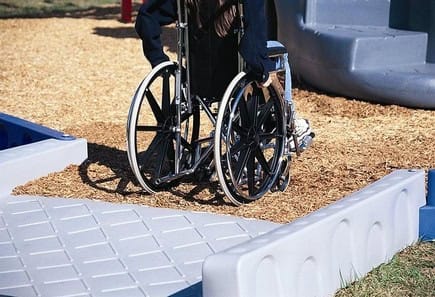
Loose-fill bark constantly shifts, spreads, compacts, and develops ruts over time.
For wheelchair users, mobility aid users, and many neurodiverse children, this creates major real-world accessibility problems.
Small wheels can:
Sink into bark
Lose traction
Become trapped
Stop suddenly
Twist unexpectedly
Struggle over uneven areas
This affects:
Wheelchairs
Powerchairs
Walkers
Mobility scooters
Strollers
Elderly carers
Support equipment
Something that appears “minor” to an able-bodied designer may completely prevent independent participation for a disabled child.
Accessible on Paper Does Not Mean Accessible in Real Life
One of the biggest issues in accessibility design is the gap between technical compliance and real-world usability.
Bark may technically satisfy minimum standards in some situations.
But lived experience tells a very different story.
Disabled families regularly experience:
Trapped castors
Inaccessible transitions
Unstable movement
Excessive physical effort
Reduced independence
Fatigue
Circulation difficulties
Safety concerns
This is why listening to disabled people and families matters so much in playground design.
Real inclusion needs to work in real life, not only in compliance documents.
The Surface Around the Equipment Matters
A wheelchair-accessible swing surrounded by inaccessible bark still creates barriers.
An inclusive seesaw connected by unstable circulation routes is still exclusionary.
Accessibility should feel continuous throughout the entire playground environment.
That includes:
Pathways
Circulation routes
Turning areas
Approach zones
Seating areas
Social spaces
Transitions between surfaces
The space around equipment is often just as important as the equipment itself.
Bark Creates Long-Term Maintenance Problems
Bark is commonly selected because it reduces upfront project costs.
In competitive playground tendering, cheaper surfacing allows more equipment to fit within a fixed budget. This can make a quote appear more attractive financially.
But this often creates a false economy.
Over the expected lifespan of a playground, bark regularly requires:
Topping up
Redistribution
Edging repairs
Drainage management
Weed control
Contamination cleanup
Compaction repairs
Labour-intensive maintenance
Heavy rain, wind, wheel movement, and natural decomposition all contribute to ongoing deterioration.
Money saved initially often becomes an ongoing servicing expense for years afterwards.
The Real Cost Over the Life of a Playground
Most playgrounds are expected to last approximately 15–20 years.
When viewed over that full lifespan, the cost difference between bark and accessible surfacing often becomes far smaller than people expect.
Bark Surfacing
Lower upfront installation cost
High ongoing maintenance cost
Constant replenishment required
Accessibility deteriorates over time
Labour-intensive servicing
Movement and displacement ongoing
Accessible Rubber or Engineered Surfacing
Higher upfront installation cost
Lower long-term maintenance cost
Better accessibility consistency
Safer circulation
Improved independence
More predictable usability over time
Accessible surfacing may cost more initially, but it often delivers far greater long-term usability, safety, and value for the wider community.
Bark Excludes More Than Wheelchair Users
The problems with bark extend well beyond wheelchairs.
Bark can create difficulties for:
Autistic children with balance/sensory challenges
ADHD children
Elderly grandparents
Parents pushing strollers
Visually impaired users
Children learning to walk
People using crutches or walkers
Support workers and carers
Inclusive playground design benefits entire communities.
Small Wheels Reveal Big Accessibility Problems
One of the biggest issues with bark is how it interacts with small wheels and castors.
Powerchairs, wheelchairs, walkers, and mobility equipment often rely on small front wheels that can:
Dig into soft surfaces
Catch suddenly
Twist sideways
Become unstable near edges or transitions
For some users, this can create:
Shoulder strain
Tipping risks
Fatigue
Loss of confidence
Dependence on assistance
True inclusion should support independence wherever possible.
Safety and Dignity Matter
Children should not have to fight their environment just to play.
Good inclusive design should feel:
Stable
Safe
Predictable
Welcoming
Comfortable to navigate
Accessibility is not only about physical entry into a playground.
It is about whether children can participate confidently, independently, and with dignity once they are there.
Lived Experience Changes the Conversation
Many accessibility problems involving bark are only fully understood through lived experience.
Disabled people and families understand:
How small wheels behave
How fatigue builds over distance
Where surfaces become unsafe
How circulation routes affect independence
What real accessibility actually looks like
Something may appear compliant on paper while functioning very differently in practice.
That is why meaningful consultation with disabled people should always be part of inclusive playground planning.
Inclusion Requires Long-Term Thinking
Inclusive playgrounds should be viewed as long-term community infrastructure.
The decisions made during design and procurement affect families for decades.
The real question should not simply be:
“What is the cheapest surface today?”
The real question should be:
“What creates the safest, most accessible, most usable playground over the full life of the space?”
Because every child deserves the opportunity to move, play, explore, and belong safely within their community.
And accessibility should never disappear the moment a wheel touches the ground.