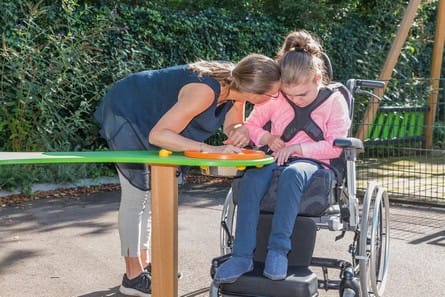
ADHD and Play Environments
ADHD and Play Environments
ADHD and Play Environments
Children with ADHD often experience the world differently. Movement, stimulation, curiosity, impulsiveness, sensory seeking, and the need for physical activity are all part of how many ADHD children explore and interact with their environment.
A well-designed playground can become far more than “just somewhere to play".
It can become a place for:
Movement regulation
Confidence building
Social connection
Emotional release
Sensory input
Risk assessment
Creativity
Learning through movement
When designed well, inclusive play environments can support not only children with ADHD but all children.
ADHD Is Not “Bad Behaviour”
One of the biggest misunderstandings around ADHD is the assumption that children are simply being naughty, disruptive, or unable to follow rules.
In reality, many ADHD children are managing:
Impulsiveness
Difficulty regulating attention
Sensory overload
Emotional dysregulation
Hyperactivity
Frustration
Social challenges
Difficulty processing large amounts of stimulation
Traditional playgrounds often focus heavily on physical challenge while overlooking emotional regulation and sensory needs.
Inclusive playground design requires us to think more deeply about how environments affect behaviour, attention, stress, and participation.
Movement Can Be Regulation
Many children with ADHD actively seek movement because it helps regulate the nervous system.
Running, climbing, spinning, swinging, jumping, rocking, balancing, and heavy physical activity may all help improve focus, calmness, and emotional control.
This is why movement-based play equipment can be extremely important.
Equipment that may support ADHD children includes:
Swings
Rotating play
Climbing structures
Obstacle courses
Balancing elements
Sensory pathways
Jumping zones
Accessible seesaws
Spinning equipment
Active social play spaces
These forms of play are not “distractions”.
For many children, they are forms of regulation.
Overstimulation Is Real
At the same time, some playgrounds can become overwhelming.
Bright colours, noise, crowds, unpredictable movement, heat, glare, lack of retreat spaces, and chaotic layouts can create sensory overload for some children with ADHD and other neurodiverse conditions.
That is why inclusive playgrounds should also include:
Quieter spaces
Shaded retreat areas
Calm sensory zones
Seating for regulation breaks
Clear sightlines
Predictable pathways
Spaces for lower-energy play
Good inclusive design is about balance.
Children should be able to seek stimulation when needed while also having safe spaces to regulate and decompress.
The Importance of Inclusive Social Play
Children with ADHD can sometimes struggle socially due to impulsiveness, communication differences, emotional reactions, or difficulty interpreting social situations.
Playgrounds should help create opportunities for shared play rather than separation.
This is one reason we strongly support inclusive equipment that children use together rather than specialised equipment that isolates disabled or neurodiverse children from their peers.
True inclusion happens when children interact naturally with one another.
Not when one child is left watching from the side.
Accessibility Is More Than Wheelchairs
Inclusive playground conversations often focus only on physical disability, but neurodiversity matters too.
An ADHD-friendly playground may include:
Predictable layouts
Sensory-aware design
Movement opportunities
Reduced bottlenecks
Clear transitions between spaces
Safe circulation pathways
Fencing is appropriate for safety
Varied sensory experiences
Spaces supporting both active and calm play
The goal is not to remove challenge or excitement.
The goal is to create environments where more children can participate successfully.
Safety Without Exclusion
Some children with ADHD may experience impulsive running, poor danger awareness, or attraction to roads, water, or high-risk areas.
This requires thoughtful design, not exclusion.
In some situations, fencing, natural barriers, planting, or safer circulation design may be important considerations, particularly near waterways, roads, or large open public spaces.
Safety and inclusion should work together.
Accessible Surfacing Matters Too
Surfacing is often overlooked in conversations about neurodiverse and inclusive playgrounds.
Loose-fill bark surfaces can create mobility issues, trip hazards, inconsistent footing, and difficulties for children using mobility aids, wheelchairs, walkers, or sensory regulation equipment.
Accessible surfacing benefits a wide range of users, including:
Disabled children
ADHD children
Autistic children
Parents with strollers
Elderly carers
Mobility aid users
Inclusive design is not just about the equipment.
It is about the entire environment.
Lived Experience Matters
Many inclusive spaces are still designed around assumptions rather than lived experience.
Children, parents, carers, disabled people, and neurodiverse individuals often identify practical problems that are missed during standard planning processes.
Something may appear inclusive on paper while functioning very differently in real life.
That is why lived-experience input is so important.
Play Should Be for Everybody
Children with ADHD do not need to be “fixed” before they are allowed to participate.
They need spaces where they can move, explore, regulate, socialise, and belong safely within their community.
Inclusive playgrounds are not about creating special spaces for a few children.
They are about creating better spaces for everybody.
Because every child deserves the chance to play, participate, and feel accepted.