Designing for Deaf Users
Designing for Deaf Users
Why This Matters
Not all children experience the playground through sound.
For deaf children, communication, safety, and interaction are primarily visual.
If a playground depends on hearing to understand what is happening, it creates barriers.
Inclusive design must ensure that deaf children can navigate, communicate, and participate fully without relying on sound.
Communication Is Visual
Deaf children communicate through:
Sign language
Facial expression
Body movement
Eye contact
Design approaches such as DeafSpace recognise that environments must support visual communication and interaction as a primary form of engagement.
If children cannot see each other clearly, communication breaks down.
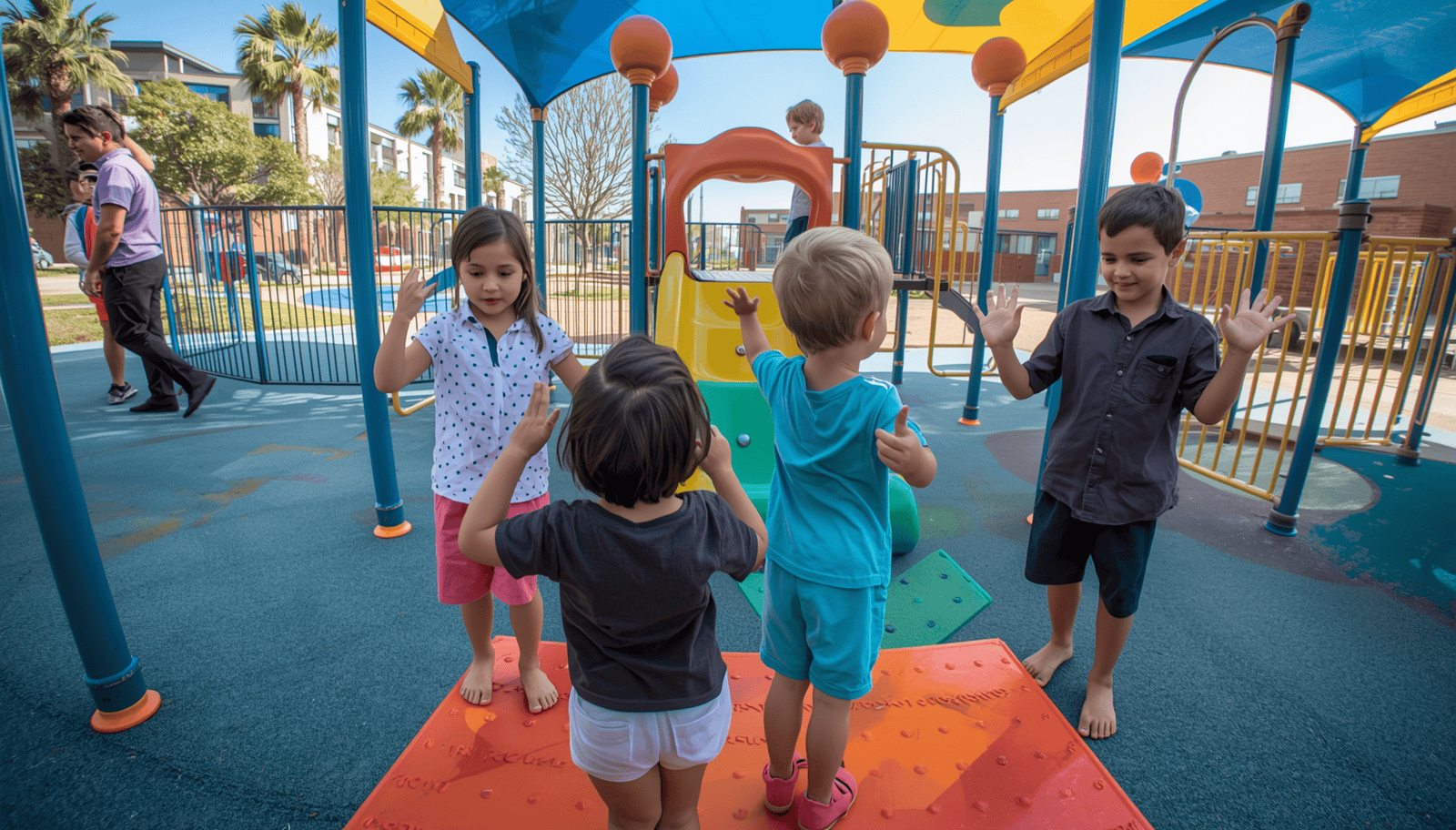
Clear Sightlines Are Essential
Visibility is critical.
Deaf children need to:
See who is around them
See how others are playing
See potential hazards
Design guidance highlights that clear lines of sight allow effective communication and social interaction through signing and visual cues.
If sightlines are blocked, the playground becomes harder to use.
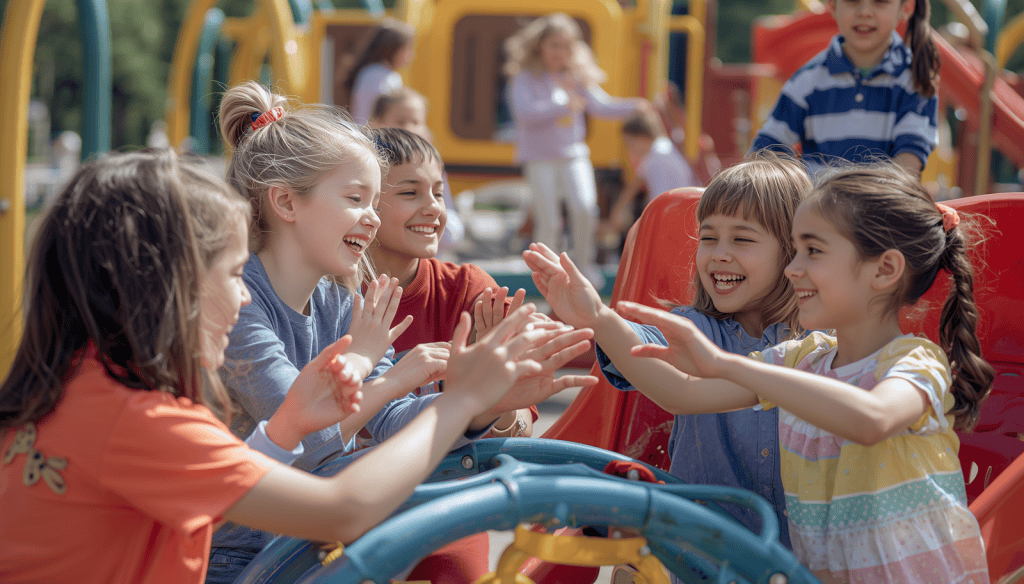
Design for Face-to-Face Interaction
Sign language and visual communication require:
Direct visibility
Space to use hands
Freedom to move
Playground design should support:
Face-to-face positioning
Circular or open seating layouts
Equipment that allows children to see each other
When children can see each other, they can communicate naturally.
Play Must Not Depend on Sound
Many playgrounds rely on sound-based interaction:
Calling out
Listening for cues
Responding to instructions
This excludes deaf children.
Inclusive design should:
Show how the equipment works
Allow intuitive use
Support interaction through movement
If a child needs to hear to participate, the design is not inclusive.
Visual Communication Supports Play
Visual communication should be built into the environment.
This includes:
Clear pathways and layout
Visible entry and exit points
Colour and contrast to define zones
Symbols and visual cues
Design guidance recommends using visual communication and layout to support understanding without relying on sound.
The space itself should explain how to use it.
Movement Becomes Communication
Play creates interaction without words.
Children connect through:
Shared movement
Timing and rhythm
Watching and copying
Equipment such as swings, seesaws, and group play elements allows children to communicate through action.
Play becomes the language.
Lighting and Visibility Matter
Deaf children rely on visual awareness for safety.
They may not hear:
A child approaching
A warning call
A sudden change
Design must support:
Good lighting
Clear visibility across spaces
No hidden or obstructed areas.
Safety must not depend on sound.
Support Awareness of Surroundings
Spatial awareness is critical.
Deaf Space principles emphasise:
Open layouts
Clear circulation
Space to see movement around you
This allows children to:
Feel safe
Understand what is happening
Move confidently through the space
When awareness is reduced, confidence drops.
Avoid Visual Clutter and Confusion
Too much visual information can be overwhelming.
Good design should be:
Clear
Simple
Consistent
Visual communication should support understanding, not compete for attention.
Social Play Without Sound
Playgrounds are social spaces.
Deaf children should be able to:
Join in easily
Interact without barriers
Be part of group play
Design guidance shows that activity-based play and visual interaction support social inclusion without requiring verbal communication.
If interaction depends on hearing, it excludes.
Support Independence
Children should not need assistance to understand the space.
They should be able to:
Navigate independently
Understand how to use the equipment
Recognise where to go
Inclusive design supports independence by making everything visible and intuitive.
Real-World Behaviour
In real playgrounds:
Children do not wait for instructions
They do not rely on explanations
They watch, copy, and join
Design must support this.
If understanding depends on hearing, some children are left out.
A Lived Experience Reality
From lived experience, the difference is immediate.
A space either:
Feels clear and usable
Or feels uncertain and difficult
A child either:
Joins in
Or stands back
That decision happens in seconds.
Design determines the outcome.
Final Thought
Designing for deaf users is not about adding features.
It is about removing reliance on sound.
When playgrounds support visual communication, clear sightlines, and shared interaction, children can participate fully.
When they rely on hearing, they exclude.
Because inclusion is not about how children hear.
It is about whether they can connect.