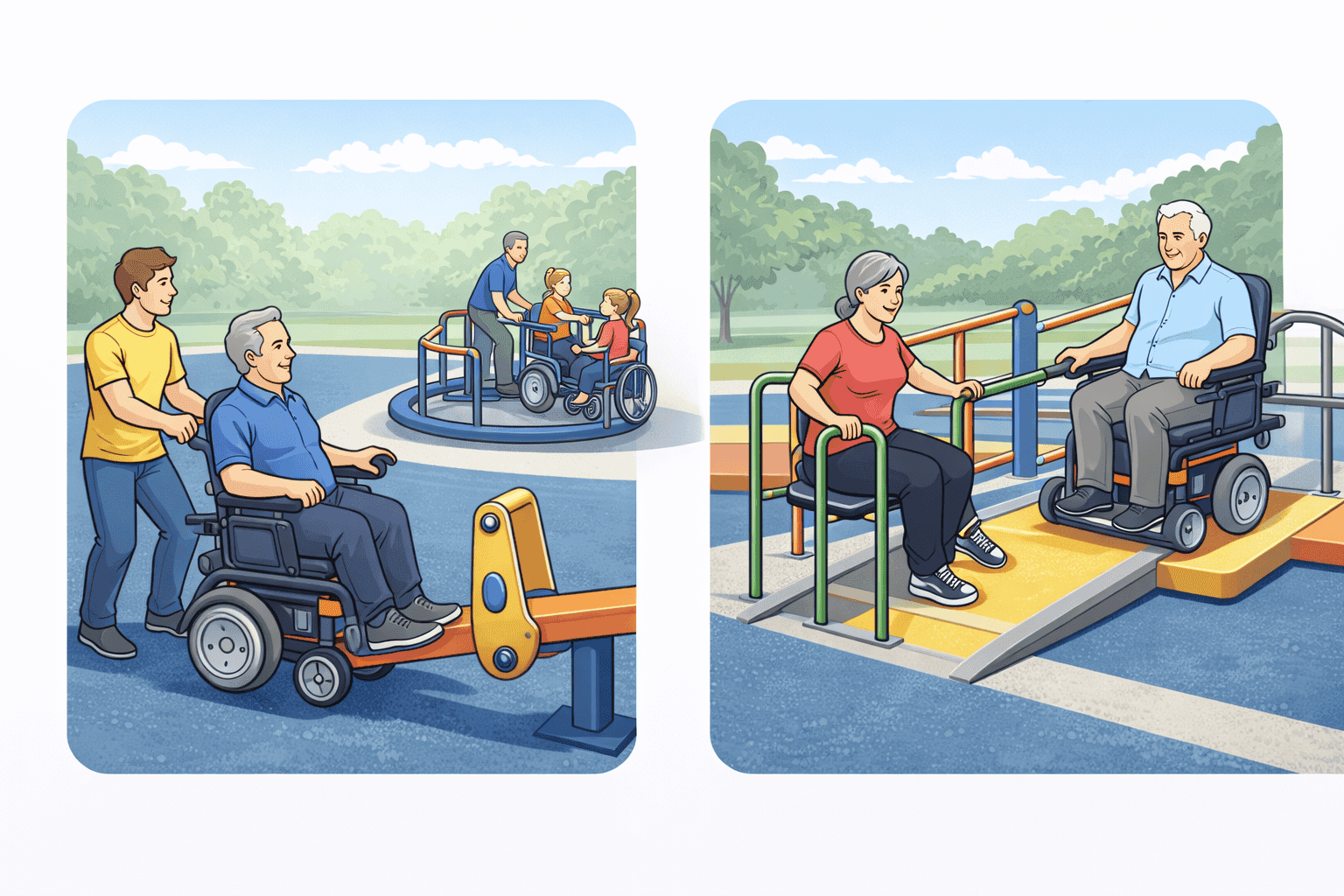
Catering for Disabled Adults?
Should Playgrounds Cater for Disabled Adults?
Yes. Inclusive playgrounds are community spaces, not age-limited facilities.
Disability does not end at childhood. Many people acquire disabilities later in life through:
stroke
brain injury
spinal injury
neurological conditions
age-related mobility loss
Public play spaces that only consider children unintentionally exclude a large part of the community who would benefit most from accessible, welcoming environments.
Why disabled adults use playgrounds
Disabled adults don’t come to playgrounds only as caregivers — they come as participants.
Playgrounds offer:
gentle movement and rehabilitation opportunities
social connection and mental wellbeing
outdoor engagement in a safe, informal setting
opportunities to interact with children and grandchildren
For stroke survivors and older wheelchair users, traditional “exercise equipment” can feel intimidating. Play-based environments are often more approachable and less clinical.
Real-world users to consider
Inclusive playgrounds should consider:
Stroke survivors
may have reduced strength on one side
may have slower reaction times
benefit from stable, predictable equipment
need rest points and gentle gradients
Older wheelchair users
often use heavier powerchairs
require larger turning circles
may fatigue quickly on slopes
benefit from secure seating and handholds
Adults with acquired disability
may have fluctuating ability
may need equipment that allows assisted use
value dignity, safety, and independence
Why “child-sized only” design is a problem
Many playgrounds unintentionally exclude adults because:
seating heights are too low
handrails are positioned for children only
equipment load limits don’t allow adult weight
circulation spaces are too tight for larger wheelchairs
This results in disabled adults being present but unable to participate — reinforcing exclusion rather than inclusion.
Inclusive design benefits everyone
Designing for disabled adults:
does not reduce children’s play value
does not require separate spaces
improves safety for all users
extends the lifespan of playground assets
A seesaw, swing, or interactive element that safely accommodates adults will also:
better support larger children
allow caregivers to participate
reduce misuse and accidental overloading
Key design principles for adult inclusion
Inclusive playgrounds should:
support adult body size and weight
allow independent wheelchair access
provide secure grip points and seating
include rest areas and level landings
avoid steep gradients and sudden drops
These principles align with universal design — spaces that work for the widest range of people without special adaptation.
A community investment, not just a children’s asset
When councils invest in inclusive playgrounds, they are investing in:
intergenerational use
public health and wellbeing
social connection
dignified access for people with disabilities at all stages of life
An inclusive playground is not just a place for children to play — it is a place where everyone belongs.