The Untapped Accessible Tourism Market
Accessible Tourism The Untapped Accessible Tourism Market
Accessible Tourism and Inclusive Communities
Accessibility is too often viewed as a compliance issue or a cost.
In reality, accessibility is also an economic opportunity.
Around the world, millions of disabled people and their families make decisions every year about where they can safely travel, stay, visit, and participate.
And those decisions are heavily influenced by accessibility.
The Numbers Are Larger Than Many Realise
Globally, approximately 16% of the population lives with some form of disability.
In New Zealand, estimates are around 17% of the population.
In Australia, the figure is estimated at approximately 20%.
But the true accessible tourism market is even larger than those numbers suggest.
Disabled travellers rarely travel alone.
Travel decisions often involve:
Parents
Partners
Carers
Grandparents
Siblings
Support workers
Entire family groups
When accessibility is poor, entire groups may choose not to visit a destination at all.
Accessibility Influences Travel Decisions
Many disabled people carefully research destinations before travelling.
They look for:
Accessible accommodation
Accessible toilets
Mobility parking
Smooth pathways
Accessible attractions
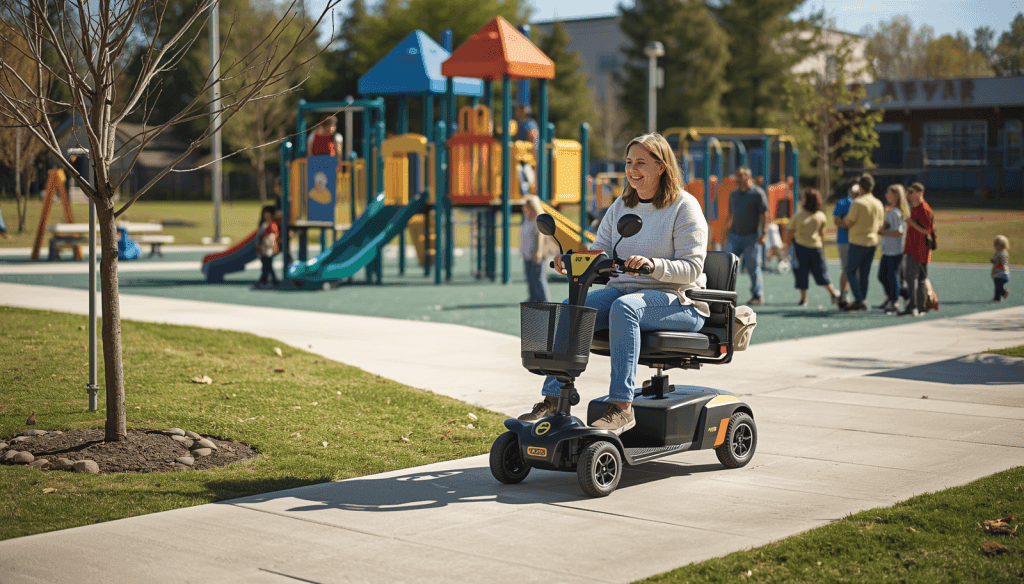
Inclusive playgrounds
Safe circulation spaces
Public transport access
Family-friendly facilities
A single inaccessible barrier can completely change travel decisions.
For many families, uncertainty itself becomes a barrier.
If people are unsure whether they will be able to safely participate, they may simply decide not to come.
Accessible Communities Attract Visitors
Imagine a city known nationally for:
Accessible playgrounds
Inclusive public spaces
Accessible beaches and walkways
Mobility-friendly design
Family inclusion
Welcoming infrastructure
Accessible tourism experiences
That reputation has value.
Families talk.
Communities share information.
Disability networks communicate constantly online.
Accessible destinations become known very quickly within the disability community.
And so do inaccessible ones.
Inclusive Playgrounds Are Tourism Infrastructure
Inclusive playgrounds are not “special projects”.
They are community infrastructure.
For many travelling families, accessible playgrounds influence:
Where they stop
Where they stay
How long they remain in an area
Whether children can safely participate
Whether parents feel welcomed
Whether families return in the future
A genuinely inclusive playground can become a destination in its own right.
Especially when connected with:
Accessible pathways
Cycleways
Toilets
Picnic areas
Beaches
Cafés
Family attractions
Inclusive infrastructure encourages longer visits and greater community participation.
The Economic Flow-On Effects
When families feel welcomed, they spend money locally.
That benefits:
Cafés
Accommodation providers
Tourism operators
Retail businesses
Local events
Community attractions
Accessibility is not simply a disability issue.
It is part of economic development and destination planning.
Inaccessible Communities Quietly Lose Visitors
The opposite is also true.
When communities remain inaccessible:
Families avoid visiting
Disabled tourists choose other destinations
Outings become stressful
Participation becomes limited
Local businesses lose potential customers
Often, this loss is invisible because people simply never arrive in the first place.
Councils may not see the visitors they are missing.
Accessibility Benefits Local Communities Too
Importantly, accessible infrastructure not only benefits tourists.
Good inclusive design improves life for:
Local disabled residents
Elderly people
Parents with strollers
Injured people
Neurodiverse families
Community groups
Carers and support workers
Accessible communities are better communities for everybody.
The Future Population Is Ageing
New Zealand and Australia both have ageing populations.
As communities age, the demand for:
Accessible pathways
Mobility-friendly spaces
Accessible recreation
Inclusive public infrastructure
will continue to increase.
Accessibility should not be viewed as a niche issue.
It is future planning.
Accessibility Is Reputation
Communities build reputations over time.
Some become known for being:
Family friendly
Progressive
Welcoming
Inclusive
Easy to navigate
Others become known for barriers, inaccessibility, and exclusion.
That reputation matters.
Especially in an increasingly connected digital world, where families openly share accessibility experiences online.
Inclusion Creates Belonging
At its core, accessibility is about people feeling welcome.
It is about whether families arrive in a city and feel:
“You belong here”.
“This place considers people like us”.
“We can participate safely and comfortably.”
That feeling creates loyalty, repeat visits, community pride, and a positive reputation.
The Real Question
The real question is not:
“Can councils afford to improve accessibility?”
The real question may be:
“Can communities afford not to?”
Because accessibility is not simply a cost.
It is an investment in:
People
Participation
Tourism
Reputation
Economic activity
Future community growth
And the cities that understand this early may become the destinations families actively choose to visit.

Inclusive World NZ Elections 2026 Project
Inclusive Play, Accessibility and the New Zealand Election 2026
Government and council decisions influence playground funding, accessibility standards, inclusive design and the development of public spaces that welcome disabled children and adults. Inclusive World New Zealand has created an Elections 2026 resource exploring the disability policies and public decisions that could shape more accessible communities across Aotearoa New Zealand.
Accessible Communities
Explore election issues involving accessible public spaces, housing, transport, community facilities and inclusive local infrastructure.
Explore Accessible CommunitiesDisabled Children and Inclusion
Learn about policies affecting disabled children, inclusive education, recreation, participation and equal opportunities within their communities.
View Issues Affecting Disabled ChildrenDisability Rights and Accountability
Read about disability rights, accessibility obligations, public consultation and the responsibility of governments and councils to remove barriers.
Explore Rights and AccountabilityPolitical Party Disability Policies
Follow political party commitments relating to disability, accessibility, community infrastructure and inclusion during the 2026 election campaign.
Compare Disability PoliciesVisit the complete Inclusive World NZ Elections 2026 Disability Hub for political party policies, disability legislation, community opinions, sector responses and election news affecting disabled New Zealanders.
Visit the Elections 2026 Disability Hub