Security Fencing
Security Fencing
Security Fencing for Inclusive Playgrounds
Security fencing is one of the most debated elements in playground design.
Some see fencing as a barrier to inclusion. Others see it as essential for safety.
The reality is more balanced.
When used correctly, security fencing can support inclusion, not restrict it. When used poorly, it can exclude, stigmatise, or create unnecessary barriers.
This page explains when fencing is needed, when it is not, and how to design fencing that keeps children safe without limiting freedom, dignity, or access.
Playgrounds are designed to be places of freedom, exploration, and play.
But for some children, especially those with autism, sensory processing differences, or developmental conditions, that freedom can also come with real safety risks.
Some children may wander or move quickly without awareness of danger.
Others may be drawn to hazards such as water, roads, car parks, or open spaces.
Security fencing can provide a controlled environment where children can explore safely.
It allows families and caregivers to relax slightly, knowing there is a defined boundary that reduces the risk of a child leaving the space unexpectedly.
This is not about restriction.
It is about creating a safer starting point for inclusive play.
The Balance Between Safety and Inclusion
Inclusion means not leaving people out.
That includes children who need boundaries to safely access a space.
A fully open playground may appear inclusive, but if some children cannot safely use it, it is not truly inclusive.
At the same time, fencing every playground without thought can create environments that feel closed, controlled, or segregated.
Good design finds the balance.
Security fencing should be used where there is a clear safety need, not as a default solution.
When Fencing Is Important
There are situations where security fencing is strongly recommended.
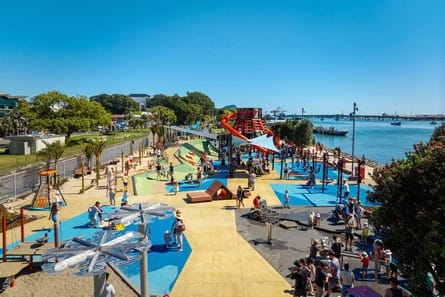
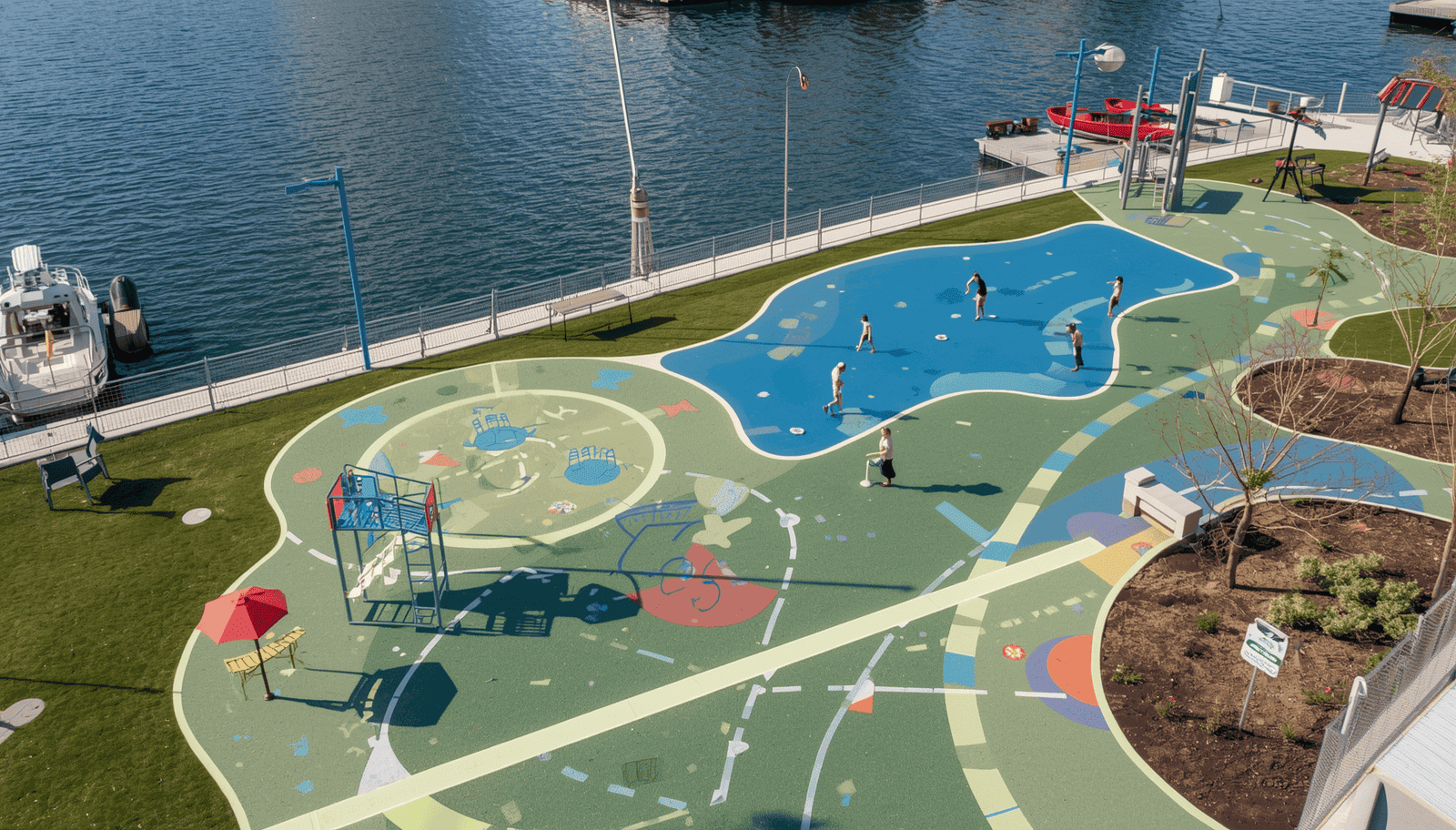
Playgrounds located near water are a key example.
Water can be highly attractive to some children, particularly those with sensory needs, and can present a serious risk.
Playgrounds near roads, car parks, or busy urban areas also benefit from fencing, especially where there is high traffic or limited natural separation.
Large open spaces where children can easily move beyond supervision may also require defined boundaries.
Fencing can also support children who experience elopement behaviour, where a child may leave a safe area quickly and unexpectedly.
In these situations, fencing is not about exclusion.
It is about reducing risk and making the space usable for more families.
When Fencing May Not Be Needed
Not every playground should be fenced.
In quiet parks, rural settings, or low-risk environments, open design may be appropriate.
Natural boundaries such as planting, gentle level changes, or layout design can sometimes achieve safety without physical fencing.
Overuse of fencing can make spaces feel institutional.
It can also create access issues if gates are difficult to use, poorly placed, or locked.
The decision to fence should always be based on real risk, not assumption.
Designing Fencing That Supports Inclusion
If fencing is used, it must be designed properly.
Accessible gates are critical.
Gates should be easy for adults, including those using wheelchairs or walking aids, to open, while still preventing young children from exiting independently.
Entrances should be wide, level, and connected to accessible paths.
Heavy gates, narrow openings, or awkward latches can turn a safety feature into a barrier.
Visibility is also important.
Fencing should allow clear sightlines into and out of the playground so children do not feel enclosed and caregivers can supervise easily.
Materials and colours should feel welcoming, not institutional.
The goal is to create a safe boundary that still feels like part of the community space.
Common Fencing Mistakes
One of the most common mistakes is installing fencing without considering access.
A fenced playground with a narrow or heavy gate can exclude wheelchair users, parents with prams, or anyone with limited strength or mobility.
Another issue is the poor placement of entrances.
If the gate is far from accessible parking or pathways, the design fails before a child even reaches the playground.
Some fenced playgrounds include only a single entry point, creating congestion and limiting escape routes in an emergency.
Locking gates can also create problems.
While intended for safety, locked gates can prevent spontaneous use and cause anxiety for families unsure whether they are allowed to enter.
Fencing must never replace good supervision or thoughtful design.
Fencing and Dignity
Fencing must be handled carefully to avoid stigma.
Spaces designed for disabled children should not feel like they are being contained or controlled.
Language, signage, and design all matter.
A well-designed fenced playground feels like a safe, welcoming space for everyone.
A poorly designed one can feel like a restricted area.
The difference is in how it is presented and integrated.
The Role of Lived Experience
Families and caregivers understand the value of fencing in ways that plans and policies often miss.
For some, a fenced playground is the difference between being able to visit or staying home.
For others, open space is important for independence and exploration.
There is no one-size-fits-all answer.
That is why lived experience must be part of the design process.
Real-world use should guide decisions, not assumptions.
Questions Councils and Designers Should Ask
Before installing fencing, councils and designers should ask whether there is a genuine safety risk that fencing will reduce.
They should consider whether children with different needs can safely access and use the space without it.
They should ask whether the fencing design supports wheelchair users, caregivers, and families.
They should consider how the fencing affects the feel of the space, whether it feels open and welcoming or closed and restrictive.
Most importantly, they should ask the community, including disabled people and families, what works for them.
The Cost of Getting It Wrong
Poor fencing design can exclude the very people it is meant to support.
It can create barriers at entrances, reduce usability, and limit independence.
Retrofitting gates, widening entrances, or redesigning layouts later can be costly.
Getting the balance right from the beginning saves time, money, and frustration.
What Good Fencing Looks Like
Good security fencing is purposeful.
It is used where risk is real and justified.
It includes wide, level, accessible entrances.
It allows clear visibility and does not feel closed off.
It connects seamlessly with accessible paths, parking, and play areas.
It supports supervision without restricting movement unnecessarily.
Most importantly, it enables more children to safely use the space, not fewer.
Our Position
We do not believe every playground should be fenced.
But we do believe some playgrounds must be fenced to be truly inclusive.
If a child cannot safely use a space without a boundary, then that space is not inclusive for them.
At the same time, fencing must never become a default solution that replaces thoughtful design.
It must be used carefully, designed properly, and informed by real-world experience.
Closing Statement
Security fencing is not about control.
It is about safety, access, and confidence.
When done well, it opens doors for families who might otherwise be excluded.
When done poorly, it creates new barriers.
Inclusive playground design is about making the right choices for the right reasons.
Fencing is one of those choices.
Used wisely, it helps create spaces where all children can play safely, freely, and together.