Indoor Sensory Room Design Guide
Indoor Sensory Room Design Guide
Indoor sensory rooms can provide something many children and families struggle to find in everyday public spaces:
a safe environment for regulation, calmness, movement, sensory exploration, communication, and emotional recovery.
For some children, sensory spaces are not simply “nice extras.”
They can be essential environments that support:
Emotional regulation
Sensory processing
Communication
Movement needs
Relaxation
Learning
Confidence
Participation
Well-designed sensory spaces benefit a wide range of users, including autistic children, ADHD children, children with sensory processing differences, disabled children, neurodiverse users, and families needing calmer environments.
Sensory Needs Are Different for Everybody
No two children experience sensory processing in exactly the same way.
Some children may seek:
Movement
Vibration
Sound
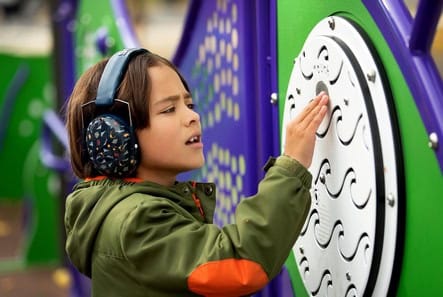
Pressure
Visual stimulation
Tactile experiences
Others may become overwhelmed by:
Noise
Bright lighting
Crowded environments
Visual clutter
Unpredictable movement
Strong smells
Echoing spaces
Good sensory room design should focus on flexibility, comfort, regulation, and user choice rather than one fixed “perfect” setup.
A Sensory Room Should Feel Safe
One of the most important aspects of sensory room design is emotional safety.
Children need environments where they feel:
Accepted
Calm
Secure
Supported
Able to regulate without judgement
This often means designing spaces that reduce stress rather than increase stimulation.
A sensory room should not feel chaotic, overcrowded, or visually overwhelming.
Regulation Is Not Bad Behaviour
Many children use movement, sound, pressure, rocking, spinning, or repetitive behaviours to regulate their nervous system.
This is particularly important for many autistic and ADHD children.
Sensory rooms should support regulation rather than punish or suppress it.
Movement and sensory seeking are often forms of communication and self-management.
Lighting Matters
Lighting can dramatically affect how a sensory environment feels.
Harsh fluorescent lighting, glare, flickering, or excessive brightness can cause discomfort or sensory overload for some users.
Good sensory spaces often include:
Adjustable lighting
Softer light sources
Indirect lighting
Calming colour tones
Low-glare environments
Sensory lighting options where appropriate
The goal is comfort and control.
Acoustic Design Is Often Overlooked
Noise can be a major issue in sensory environments.
Echoing rooms, hard surfaces, loud ventilation systems, or unpredictable sound can quickly become overwhelming.
Acoustic considerations may include:
Soft furnishings
Acoustic wall treatments
Carpet or soft flooring
Sound reduction materials
Quieter equipment choices
Controlled sensory sound zones
Sometimes reducing noise is more important than adding stimulation.
Movement-Based Sensory Equipment
Many children benefit from movement opportunities within sensory environments.
This may include:
Swings
Rocking equipment
Crash mats
Climbing elements
Weighted products
Balance activities
Vibration equipment
Sensory pathways
Movement cushions
Movement can help improve:
Regulation
Focus
Body awareness
Calming
Confidence
Sensory spaces should support safe movement without feeling restrictive.
Calm Spaces Are Just As Important
Not every sensory room needs to be highly stimulating.
Some children benefit most from:
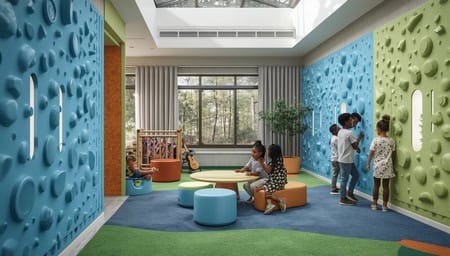
Quiet corners
Retreat spaces
Soft seating
Dim lighting
Reduced visual clutter
Calming textures
Lower sensory input
A well-designed sensory environment often includes both active and calming zones.
Children should be able to choose what works for them.
Colour and Visual Design
Colour should be used thoughtfully.
Overly bright or visually chaotic environments can create sensory overload for some children.
Good sensory design often focuses on:
Balanced colour palettes
Clear visual organisation
Calming tones in retreat spaces
Contrast where needed for orientation and safety
Reduced clutter
Sensory rooms should feel understandable and predictable.
Accessibility Matters Too
Sensory spaces should also be physically accessible.
This includes:
Wheelchair access
Manoeuvring space
Accessible seating
Smooth circulation pathways
Accessible surfacing
Transfer space around equipment
Inclusive equipment selection
Accessibility is not only about entering the room.
It is about whether children can meaningfully participate once inside.
Designing for Independence
Good sensory room design should support independence wherever possible.
Children should feel able to:
Make choices
Move safely through the space
Regulate themselves
Communicate comfortably
Interact at their own pace
This helps build confidence and dignity.
Families and Carers Matter Too
Sensory environments should also consider the needs of:
Parents
Carers
Support workers
Siblings
Therapists
Educators
Comfortable seating, visibility, circulation space, and calm environments help create spaces that work for entire families rather than focusing only on equipment.
Lived Experience Improves Design
One of the biggest mistakes in sensory room design is relying purely on theory or product catalogues without listening to people who actually use these spaces.
Disabled people, autistic individuals, neurodiverse users, carers, and families often identify practical issues missed during standard planning processes.
Something may appear visually impressive while performing poorly in real life.
Lived experience helps create spaces that are genuinely usable, calming, and inclusive.
Sensory Spaces Should Support Inclusion
A sensory room should never feel like a place where children are sent away because they are “too difficult” for mainstream environments.
The goal should always be inclusion, participation, and support.
Well-designed sensory environments can help children:
Regulate safely
Return to learning or play
Reduce stress
Improve participation
Build confidence
Feel accepted within their community
Because every child deserves environments where they feel safe, supported, and able to participate in ways that work for them.