Universal Design vs Inclusive Design
Universal Design vs Inclusive Design
The terms “universal design” and “inclusive design” are often used interchangeably in playground and accessibility conversations.
While they share many similarities, they are not exactly the same thing.
Understanding the difference matters because the way we design public spaces directly affects whether disabled people feel welcomed, included, independent, and able to participate fully within their community.
Good design is not just about compliance.
It is about real people using real spaces in real life.
What Is Universal Design?
Universal design is based on the idea that environments should be usable by as many people as possible without the need for adaptation or specialised design later.
The goal is broad accessibility from the beginning.
In playgrounds and public spaces, universal design may include:
Accessible pathways
Ramps
Wide circulation routes
Accessible toilets
Clear signage
Stable surfacing
Predictable layouts
Seating and rest areas
Step-free access
Universal design aims to create environments that work for the widest possible range of users.
What Is Inclusive Design?
Inclusive design goes a step further.
Rather than focusing only on broad usability, inclusive design actively considers the lived experiences, barriers, and participation needs of people who are often excluded from public spaces.
Inclusive design asks:
Who is still being left out?
Who struggles to participate here?
What barriers still exist in real life?
How do disabled people actually experience this space?
This is where lived experience becomes critically important.
Accessible on Paper vs Accessible in Real Life
One of the biggest problems in modern accessibility is the gap between technical compliance and real-world usability.
A playground may technically meet standards yet still be difficult or stressful for many disabled children and families to use.
For example:
Bark may technically comply while still trapping wheels
Pathways may exist, but lack manoeuvring space
“Inclusive” equipment may still require lifting or assistance
Sensory overload may make environments unusable for neurodiverse children
Poor contrast may create navigation issues for low vision users
Something can look accessible in a concept drawing while functioning very differently in practice.
Inclusive design focuses on those real-world experiences.
Universal Design Often Focuses on Access
Universal design frequently focuses on whether people can physically enter and move through a space.
That is important.
But inclusion is about more than entry.
Inclusive design asks whether people can:
Participate meaningfully
Interact socially
Play alongside peers
Regulate comfortably
Move independently
Feel welcomed and accepted
There is a difference between being allowed into a space and genuinely belonging within it.
Inclusion Requires Listening
One of the biggest differences between universal and inclusive design is the importance placed on lived experience.
Inclusive design recognises that disabled people, neurodiverse individuals, carers, and families often identify barriers that professionals may overlook.
This includes practical issues such as:
Trapped wheelchair castors
Poor transitions
Inaccessible surfacing
Sensory overload
Unsafe circulation layouts
Transfer difficulties
Visibility problems
Inaccessible social spaces
People living these experiences every day often understand usability in ways that standards alone cannot fully capture.
Inclusive Play Should Be Shared
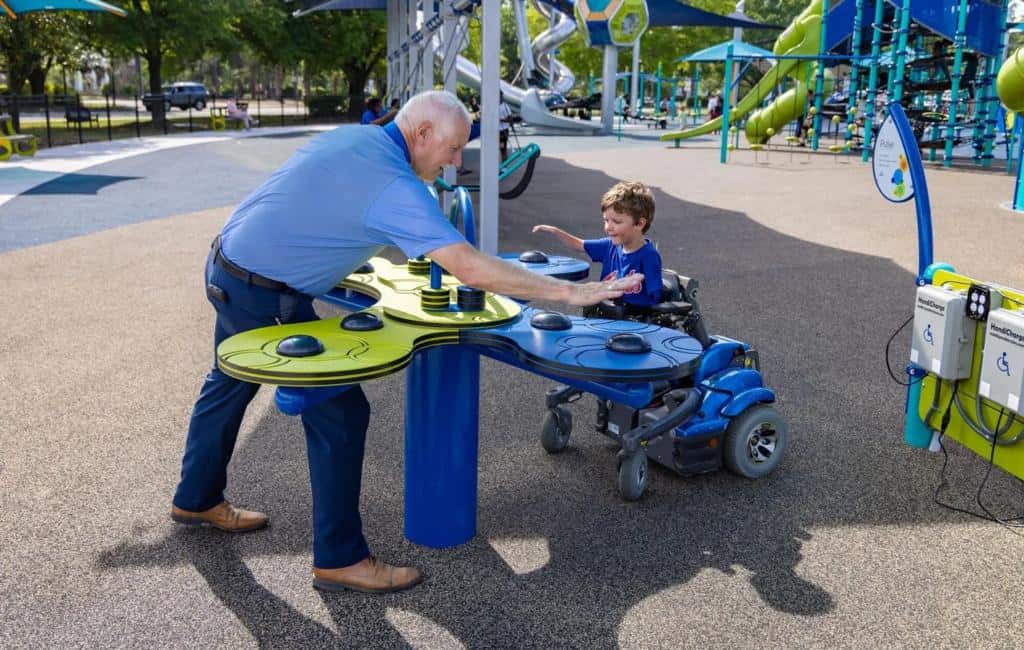
Inclusive playgrounds should not create separate spaces “for disabled children.”
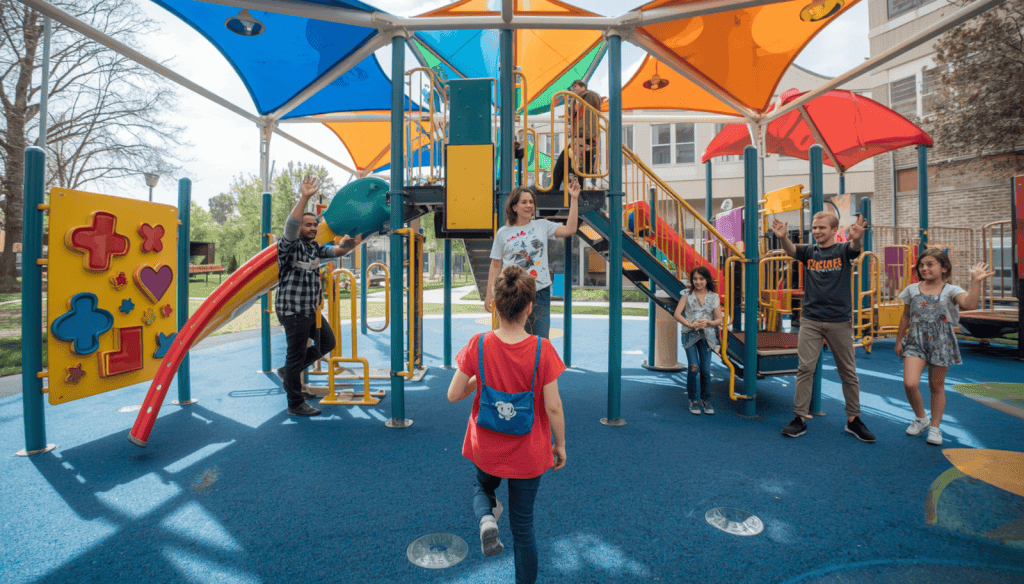
True inclusion means children playing together naturally.
That is why modern inclusive design increasingly focuses on:
Shared-use equipment
Integrated accessible play
Social interaction
Side-by-side participation
Dignity and independence
No segregation.
No isolated “special” areas.
Just community spaces where more children can genuinely participate together.
Sensory and Neurodiverse Inclusion
Traditional accessibility conversations often focused heavily on physical disability.
Inclusive design recognises that accessibility also includes:
Autism
ADHD
Sensory processing differences
Cognitive disabilities
Low vision
Communication differences
Emotional regulation needs
An environment may physically allow entry while still being overwhelming, confusing, unsafe, or stressful for many users.
Inclusive design considers the full experience of the space.
Surfacing and Real Accessibility
Surfacing provides one of the clearest examples of the difference between universal and inclusive thinking.
Loose-fill bark is often selected because it reduces upfront installation costs.
However, lived experience shows bark can create major barriers for:
Wheelchair users
Walkers and mobility aids
Elderly carers
Parents with strollers
Neurodiverse children with balance difficulties
Bark shifts, creates uneven movement, traps wheels, and often reduces independence.
An inclusive design approach asks:
“Does this surface genuinely work well for the people expected to use it?”
Independence and Dignity Matter
Inclusive design strongly focuses on independence wherever possible.
Children should not constantly require:
Lifting
Pushing
Repositioning
Manual transfers
Excessive support
Good inclusive design helps children:
Move confidently
Make choices
Participate socially
Explore safely
Feel capable and included
Accessibility without dignity is not true inclusion.
Inclusion Benefits Everybody
One of the most important things to understand is that inclusive design rarely benefits only disabled people.
Good inclusive playground design often creates better spaces for:
Younger children
Grandparents
Parents with strollers
Mobility aid users
Neurodiverse families
Injured visitors
Community groups
Entire families using public spaces together
Inclusive communities are stronger communities.
The Goal Is Belonging
At its core, the difference between universal design and inclusive design comes down to one important idea:
Universal design often asks:
“Can people access this space?”
Inclusive design asks:
“Do people genuinely feel welcomed, valued, safe, and able to participate once they are here?”
That difference matters.
Because every child deserves more than simply being present in a playground.
They deserve the opportunity to belong.