UNCRPD and Te Tiriti o Waitangi
Designing Inclusive Play Projects That Align with UNCRPD and Te Tiriti o Waitangi
Inclusive playground projects are strongest when they are supported by clear values, practical planning, and a well-articulated understanding of inclusion.
For councils, schools, community organisations, and funding applicants, it is increasingly important to show how a proposed project aligns with the United Nations Convention on the Rights of Persons with Disabilities (UNCRPD) and Te Tiriti o Waitangi.
Why alignment matters
A well-prepared application should do more than describe equipment or site upgrades. It should explain how the project will improve participation, reduce barriers, and create more equitable access to play.
Alignment with UNCRPD and Te Tiriti o Waitangi helps strengthen the case that a project has been developed with consideration for:
- the rights of disabled children and families
- participation and inclusion
- equitable access to community spaces
- partnership, representation, and community voice
- respect for the diverse communities a playspace is intended to serve
What applicants should be ready to show
Application questions commonly provide an opportunity to explain how a project reflects inclusive values in both planning and delivery.
Applicants may wish to address areas such as:
- how disabled children will benefit from improved access and participation
- how barriers to play have been identified and considered
- whether community perspectives have informed the proposal
- how the project recognises local context, partnership, and cultural responsiveness
- how the design supports inclusion beyond minimum compliance
Strong applications usually connect these principles to real design decisions, rather than speaking only in general terms.
From principle to practical design
A rights-based and partnership-informed approach should be visible in the physical design of the project.
This can include consideration of:
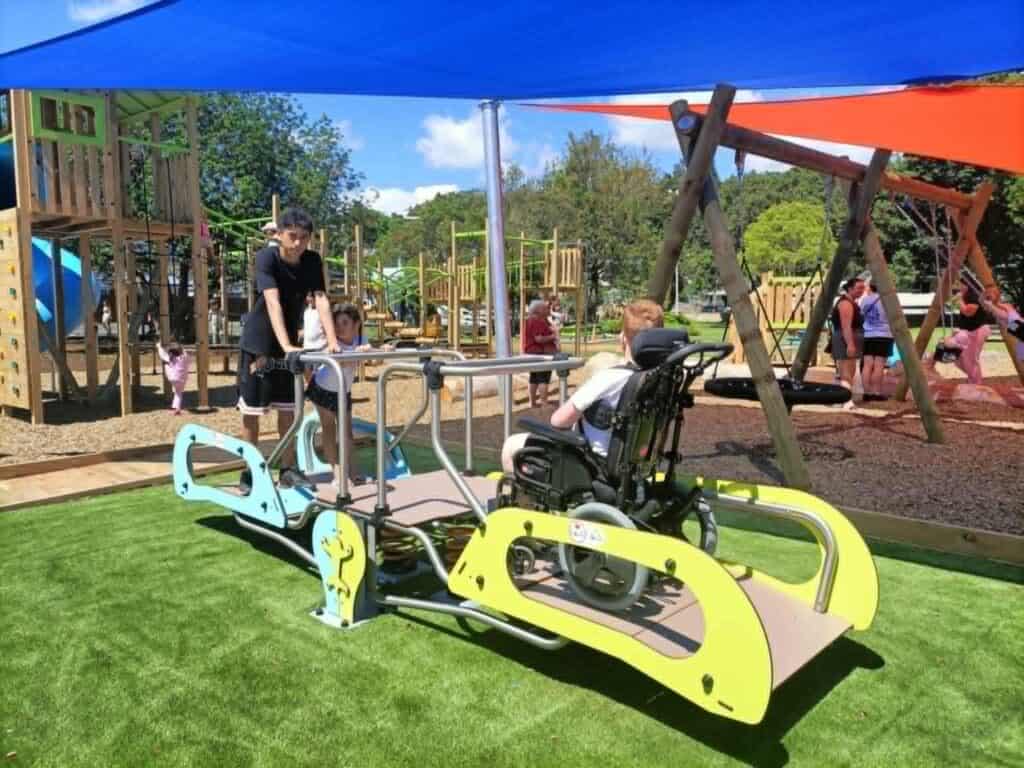
- accessible play equipment
- circulation and approach routes
- surfacing and transfer opportunities
- sensory inclusion
- family and caregiver access
- rest, shade, seating, and social connection
- layout decisions that support shared play, not separation
The goal is to create environments that support meaningful participation for a wide range of users.
Better applications, better outcomes
When applicants respond carefully to questions around inclusion, equity, and partnership, they not only strengthen their funding application — they also help create better projects.
This approach supports more thoughtful planning, better community outcomes, and play spaces that are more likely to serve children and families well over time.
Closing statement
Inclusive design is most effective when it is intentional, clearly explained, and grounded in both rights and community partnership.