Community Voices: Matter
Community Voices: Why Accessible Playgrounds Matter
Accessible playgrounds are often discussed in planning meetings, funding applications, and council reports. But the real impact of inclusive play spaces is felt by the families who rely on them every day.
This page shares real experiences from parents, carers, and disabled people about why accessible playground equipment matters. These stories help decision-makers understand how inclusive play spaces change everyday life for families and communities.
Accessible playgrounds are not simply a design feature; they are a practical support for families navigating disability in everyday life.
When equipment is designed so that children of all abilities can play together, the result is not just access, but dignity, independence, and belonging.
Community Voices – My Child Could Finally Play
Hi, we stopped off at Waipu on the way from Kerikeri to starship because my son was having surgery.
My son is not in a wheelchair, but he has a wheelchair buggy. He is 5 with Down Syndrome and ASD.
He started walking at 4. He is a big boy, hard to lift, but his mobility and development is more that of a young toddler.
There is not a lot of play equipment he can access independently. He loves the web swing, but I have to lift him on to it, my mother who came to support us while he was in hospital could not put him on the web swing at Waipu, but she could wheel his buggy onto the disability swing while she waited for me to get something we forgot from the car.
It was great because my son was excited but there were already kids on the web swing. We had to keep him in the buggy because until it was free he would have kept walking straight in front of the web swing to try and get on with zero safety awareness.
The swing you put in at Waipu was great and it avoided a meltdown. Later when he was walking, he chose to get on it and could just walk on independently and that is important.
There was already a non-disabled child of about 6 and they both used the swing together also great to see.
My mum and I both thought it was a great addition to the playground, and we are so happy to see one in a small playground.
I made a note that Waipu was a good place for us to stop on our way to Auckland.
Things like this may not feel big to someone without a disabled child but for those of us with disabled kids and particularly if you also have typically developed kids, it is a play area they can play together, something that saves parents backs so they aren’t lifting their child to help them access other equipment.
We often stop at Whangarei on a trip to Auckland, but that disability swing was a big part of us deciding Waipu was now a good alternative. If go to Whangarei or stop at Whangarei on the way south we tend to go to the basin as the playground there is more accessible.
My older kids do really like the new playground you are thinking of putting the swing in so I am happy to give a submission in support if it would help and thank for your work.
Helen
Share Your Experience
If accessible playground equipment has made a difference to your family, we would love to hear your story.
Community voices help decision-makers understand the real impact of inclusive play spaces.
You can share your experience here:
Why Accessible Playgrounds Are Needed
Many playgrounds unintentionally exclude children with disabilities. Equipment may look inclusive, but in practice it often requires lifting, assistance, or physical ability that some families simply do not have.
For families raising disabled children, accessible play equipment can mean the difference between:
Being able to stop and play during a long journey
A child experiencing independence for the first time
Siblings being able to play together
Parents avoiding physically lifting their children onto equipment
A calm outing instead of a stressful or overwhelming experience
Small design decisions can have a very large impact on real families.
Accessible playground equipment also benefits many other members of the community, including:
children with developmental delays
children recovering from injury
adults with disabilities
grandparents with limited mobility
families with prams or mobility aids


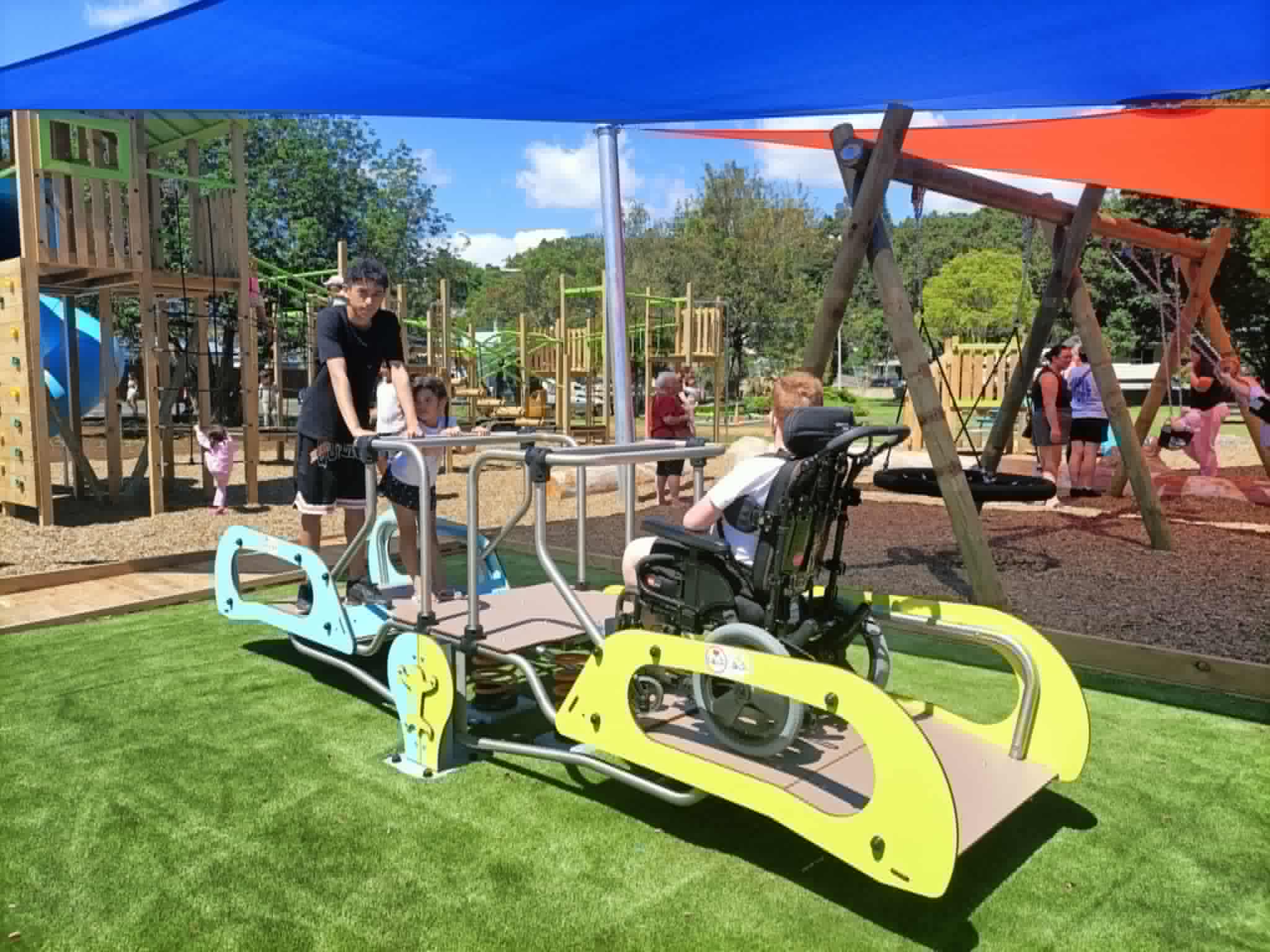
Why These Voices Matter
Accessible playgrounds are sometimes viewed as a “nice to have” feature.
For many families, they are much more than that.
They are places where
Children experience independence
Siblings can play together
families feel welcome in public spaces
communities demonstrate that everyone belongs
When accessible equipment is installed, the feedback from families is often immediate and overwhelmingly positive.
These stories show that inclusive design is not theoretical. It changes real experiences for real people.
A Message for Decision Makers
Inclusive playground equipment does not benefit a small group of people. It benefits entire communities.
Families remember places where their children can play safely and independently. Those places become destinations.
Accessible design helps communities become known as welcoming, inclusive, and family-friendly.
The voices shared here demonstrate that inclusive play is not just about compliance or policy, it is about creating spaces where everyone can participate.